Leonardo Sciascia
- Home
- Where to Stay in Sicily?
Where to Stay in Sicily: A Traveler's Companion
The question has haunted travelers since the ancients first glimpsed Sicily's shores from their wooden vessels. Today, we see the island sprawling before us like a palimpsest of civilizations. Standing there, on the shoulders of the giants, the question remains: where to stay in Sicily?
The matter is not trivial, for your lodging becomes the axis around which all other experiences revolve, the sanctuary to which you return when the Sicilian sun has exhausted its fierce blessings upon your shoulders.
There are plenty of places to stay on this island—roughly 9,900 square miles of limestone cliffs, volcanic slopes, and baroque townships—but to fill your needs demands strategic positioning. The choice of where to live shapes the journey itself.
So, let's take a look at different parts of Sicily and the opportunities for living they offer.
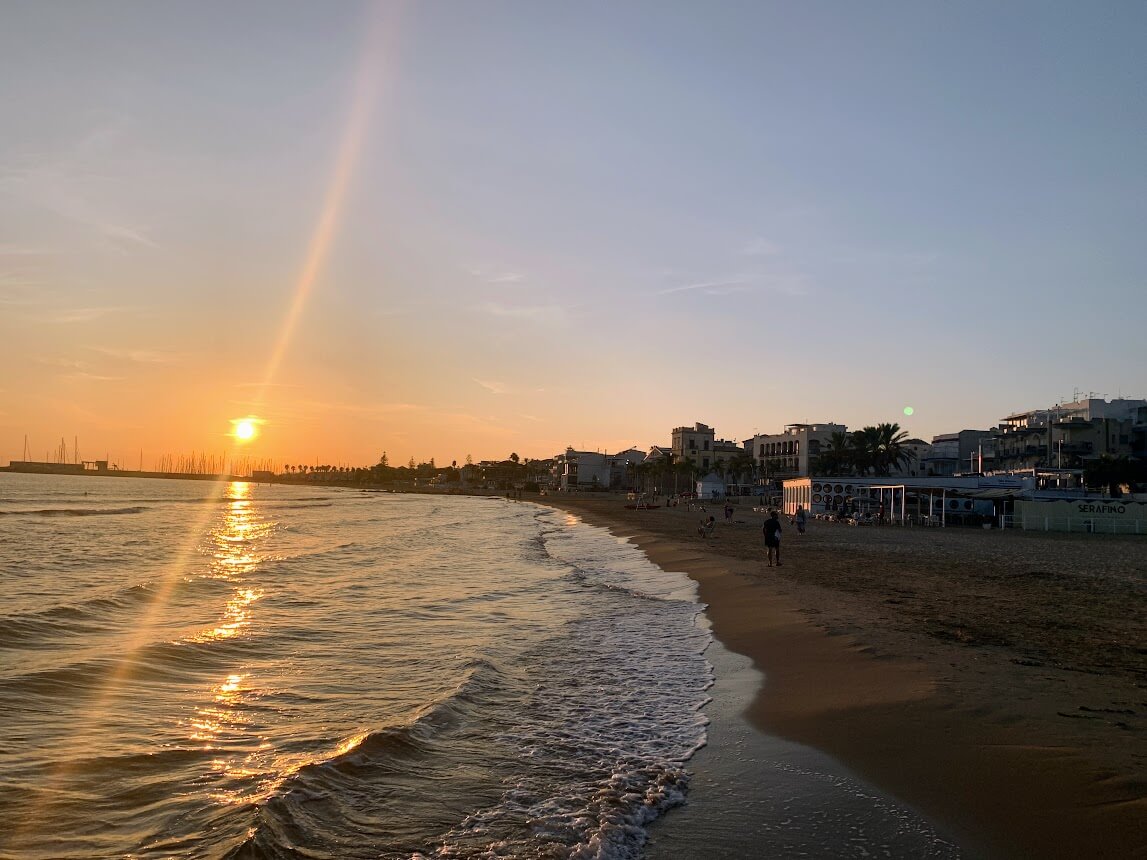 Beautiful beaches surround Sicily, many of them unknown to the larger crowds. Like this one in Marina di Ragusa.
Where to Stay in Sicily: Palermo and Its Surroundings
Palermo
We begin with Palermo, the capital of the island, that teeming melting pot on the northern coast, where the Arab domes and Norman towers pierce a sky perpetually hazed with salt and exhaust.
Here, the streets unfold in labyrinthine tangles, each alleyway a vein throbbing with history. The accommodations range from frescoed palazzos converted into boutique hotels to modest pensioni where elderly proprietors still hang laundry across iron balconies.
The best option is to stay within the centro storico - the historical center. That's where you'll find all the main attractions like the markets—Ballarò, Vucciria, and Capo—where the sometimes chaotic atmosphere does not diminish the wonderment at the wide range of products they offer.
The proximity to the Quattro Canti, that octagonal heart where four baroque façades converge, places you within a fifteen-minute walk of the Palatine Chapel's golden mosaics and the Massimo Theatre's neoclassical portico.
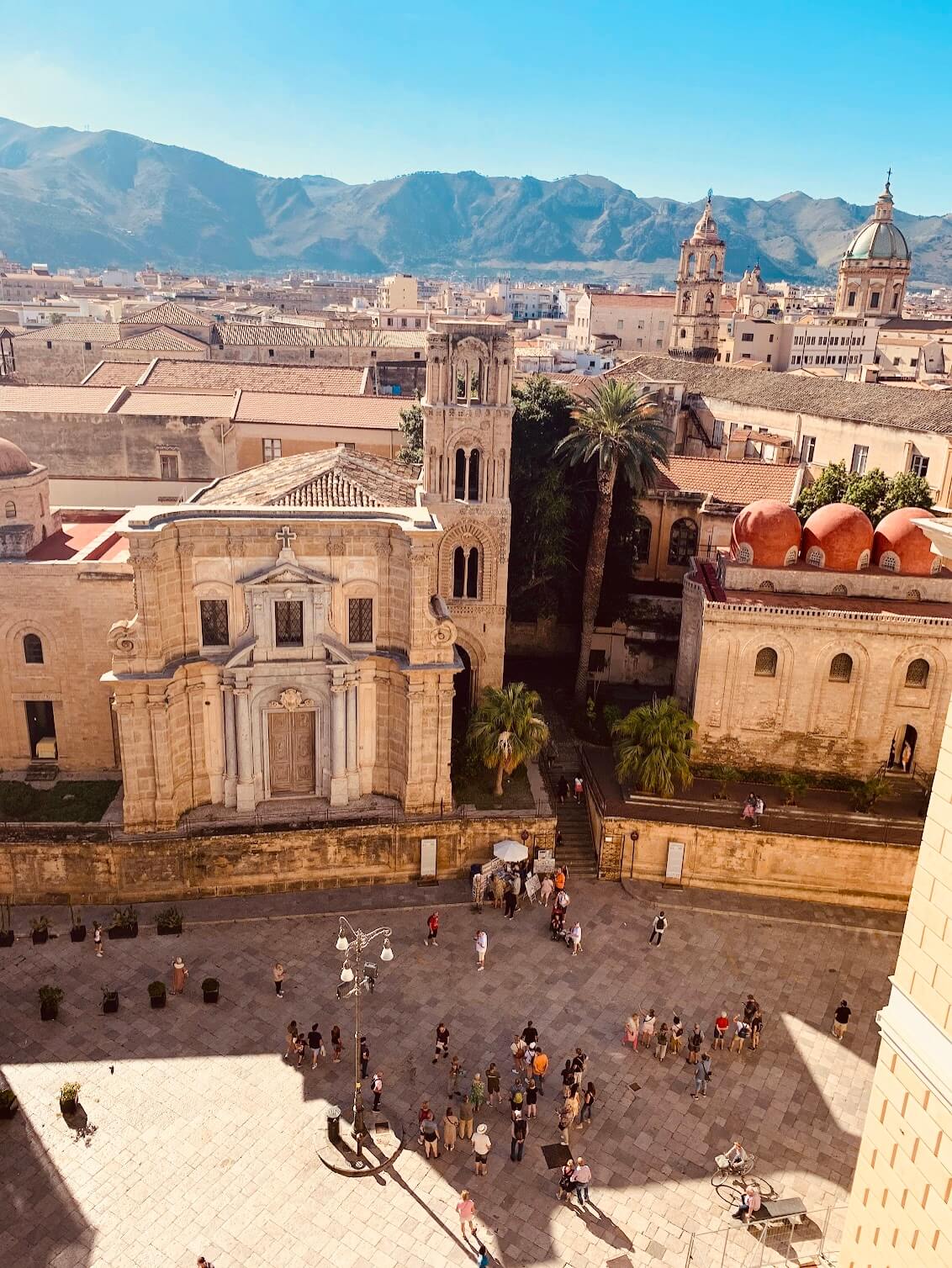 Piazza Bellini is in the middle of historical center of Palermo. From there, it's a short distance to all the major attractions.
Yet Palermo is not for the faint of spirit.
The noise ascends from the cobblestones before dawn—motor scooters, hawking vendors, the clatter of metal shutters—and persists until the small hours when the last revelers stumble home from their wine-soaked activities.
If you seek the best hotels in Sicily within this urban tumult, look to establishments like the Grand Hotel et des Palmes on Via Roma, where Wagner once composed. Its belle-époque salons still exhale a melancholy grandeur.
Or take the newer Villa Igiea, perched on the waterfront at Acquasanta, with its Liberty-style architecture gazing across the vast indigo of the Tyrrhenian.
Both offer refuge and a measure of quietude. However, the city's clamor will find you there as well. The only way to escape Palermo is to simply go somewhere else. And even then, it might follow you like an insistent ghost, whispering to come back.
Cefalu
Cefalù, on the northern coast between Palermo and Capo d'Orlando, compresses its considerable charm into a compact package: a Norman cathedral with Byzantine mosaics, a crescent beach of golden sand, and a medieval quarter pressed against the Rocca, the limestone crag that towers 270 meters above the town.
The best hotels in Sicily for beach lovers cluster along the lungomare, with their balconies overlooking the Tyrrhenian Sea.
However, I have always favored the smaller establishments tucked into the old town's alleys. There, at best, breakfast is served in courtyards fragrant with lemon trees, and the morning light slants through arabesque windows.
The town's scale allows you to walk everywhere, from the cathedral to the harbor to the trailhead ascending the Rocca. The evening passeggiata along Corso Ruggero offers a cross-section of Sicilian life: fishermen, tourists, nuns, and children chasing soccer balls across the piazza.
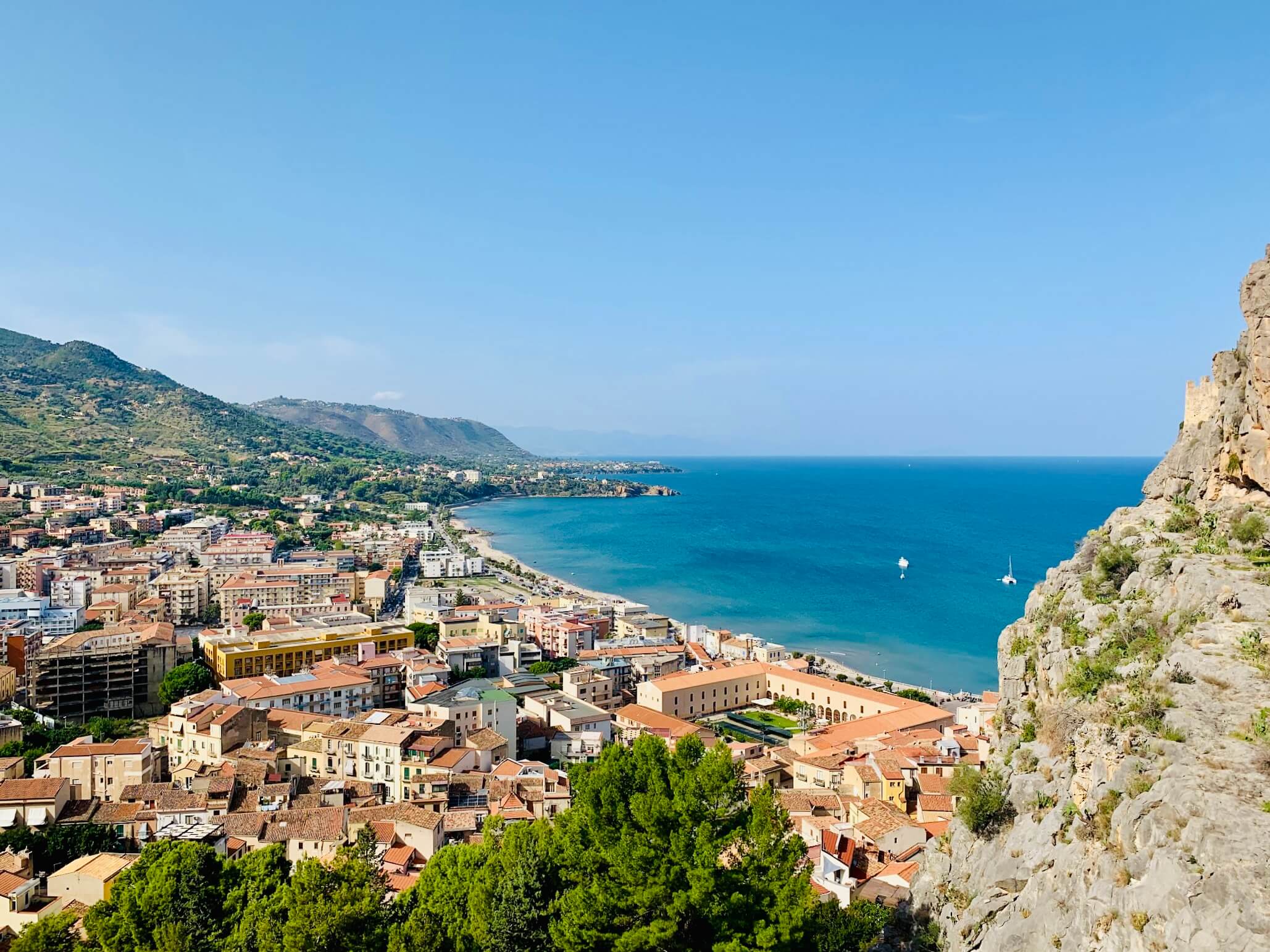 A view over Cefalu.
Where to Stay in Sicily: The East Coast
Taormina
Let's turn eastward now, along the coastal autostrada that clings to cliffs and tunnels through mountains, until you reach Taormina, that storied nest suspended between sky and sea.
Perched at 200 meters above the Ionian waves, this town has seduced emperors and poets, film stars and honeymooners, with its theatrical vistas and its Greco-Roman amphitheater framing Mount Etna's smoldering cone.
The best places to stay in Sicily for those who prize romance and panorama cluster along Corso Umberto, the pedestrian street where medieval archways frame boutique hotels with terraces overlooking the bay of Naxos.
There, it is possible to sit at twilight, watching the sun sink behind Etna's silhouette. At the same time, swallows trace fancy ornaments against the fading light.
Taormina's enchantment is undeniable, though it exacts a price in the form of tourist crowds and inflated costs.
Or, consider the village of Castelmola, a brief ascent above Taormina, where stone houses cling to the mountainside like barnacles and the almond wine flows thick and sweet in shadowed bars.
Here, the lodgings are fewer, simpler, but the silence at night is profound, broken only by the wind's passage through the pines and the distant hiss of the sea far below.
I'd recommend this altitude - or the countryside around it - for those who wish to observe Taormina's drama from a solitary remove, descending only when necessity or curiosity compels.
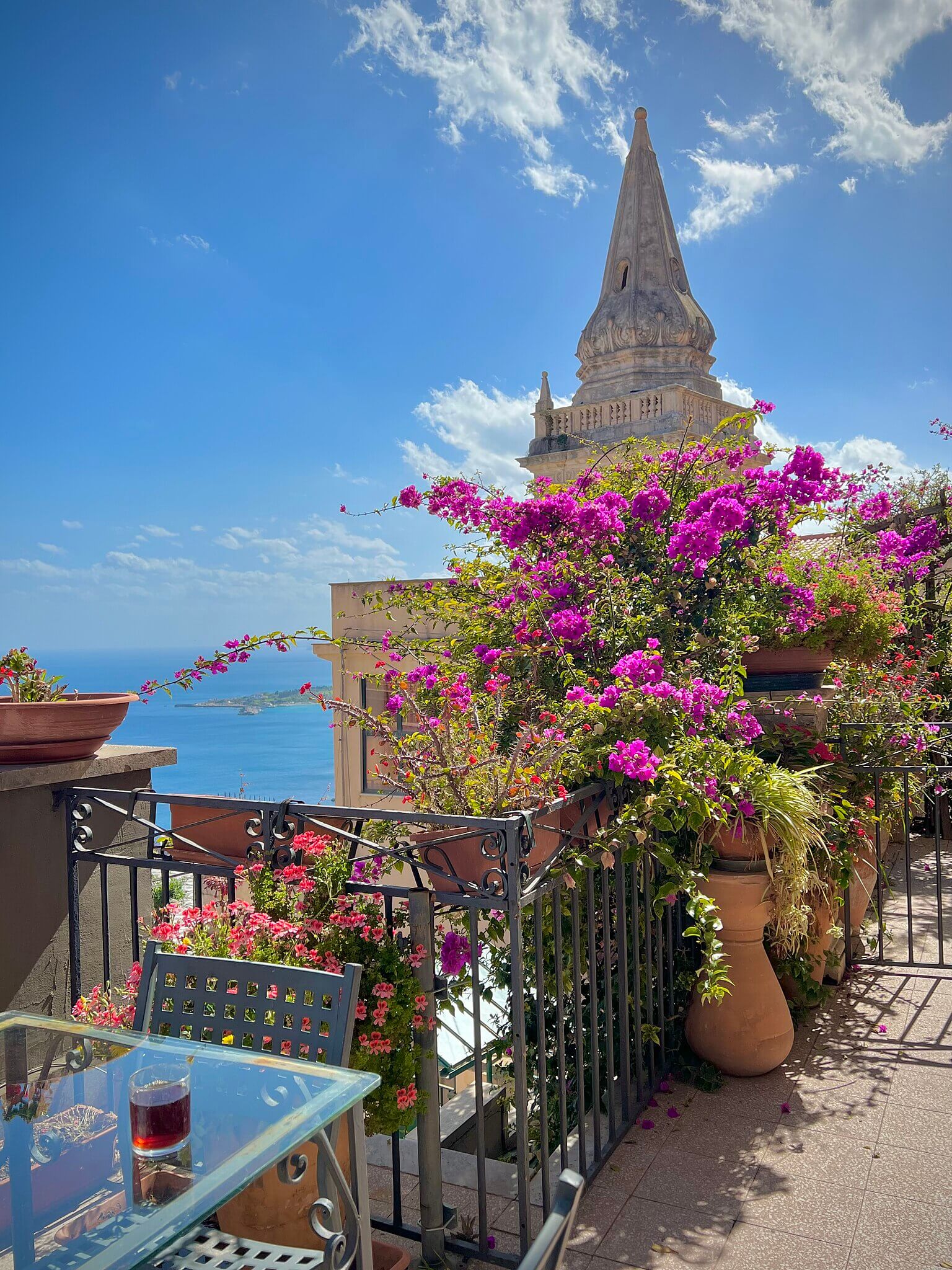 Taormina has been a popular tourist destination for hundreds of years. (Sharon Hahn Darlin / Wikimedia Commons)
Accommodations on Mount Etna
Mount Etna, Europe's most active volcano, dominates the island's eastern flank, its slopes terraced with vineyards and chestnut forests, its summit perpetually exhaling plumes of sulfurous steam.
The villages surrounding the volcano—Nicolosi, Zafferana Etnea, and Linguaglossa, among others—offer lodgings that range from alpine-style chalets to converted lava-stone farmhouses. Staying here also grants access to the volcano's trails and cable-car stations.
It is possible to climb the Torre del Filosofo at 2,900 meters, where the air thins and the landscape turns lunar, black ash crunching underfoot, and the crater's rim glowing red in the dusk.
After a hard day's hiking, you can return to your mountain lodge afterward, where the proprietor serves Etna Rosso wine and wild boar ragù, and the night cold seeps through the walls despite the fireplace's blaze.
Syracuse
Syracuse, ancient Siracusa, awaits you on the southeastern coast. It is a city of two souls: the modern part on the mainland and Ortigia, the old beating heart of the town. The latter is an island connected by a bridge, where narrow alleys wind between palazzi, honey-colored and ochre.
Stay on Ortigia if you can secure a room; the island measures barely one square kilometer, yet it contains the Duomo—a cathedral built into the shell of a fifth-century-BC temple to Athena—and the Fountain of Arethusa, where papyrus grows in a spring-fed pool beside the harbor.
You can even lodge in a converted convent near the Piazza del Duomo, its stone walls two feet thick, the morning light filtering through shutters to illuminate frescoes depicting martyrdoms both beautiful and terrible.
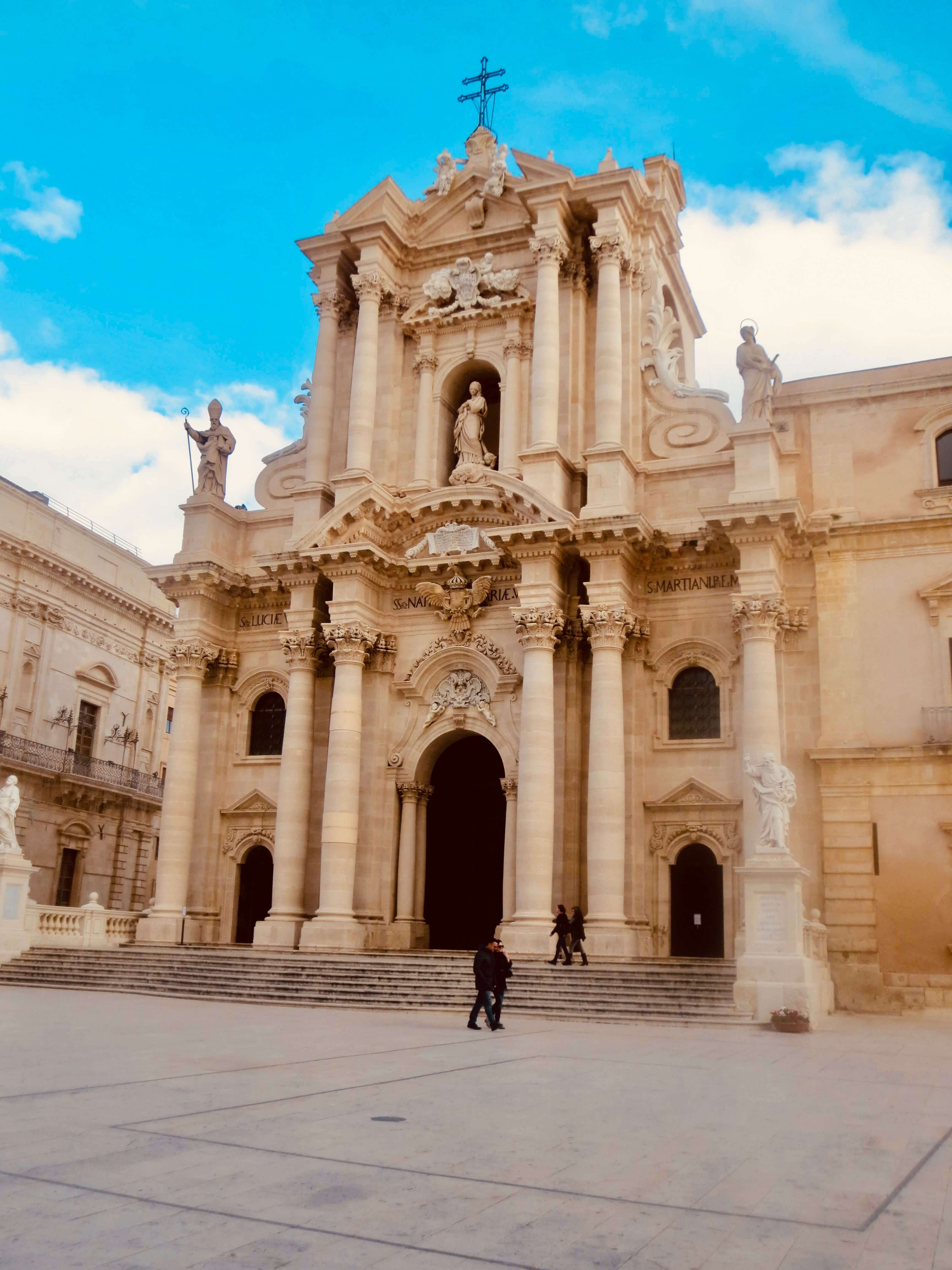 Duomo of Syracuse in the island of Ortigia.
The island's intimacy allows you to walk everywhere, from the fish market to the lungomare where fishermen mend nets in the afternoon's golden idleness.
The accommodation here tends toward the charming rather than the luxurious, though exceptions exist: the Ortea Palace Hotel & Spa occupies a restored palazzo with a rooftop restaurant overlooking the harbor.
Prices remain more forgiving than Taormina's, and the city's archaeological park—the Greek theater, the Roman amphitheater, the Ear of Dionysius grotto—lies a brief taxi ride across the bridge, a journey of perhaps ten minutes through the streets of the modern part of the town.
Where to Stay in Sicily: The Noto Valley
Noto
We now venture to the island's southeastern corner, to the Val di Noto, that famous constellation of baroque towns rebuilt after the 1693 earthquake leveled the region.
Noto itself rises in tiers of golden limestone, its cathedral and palaces aligned along a ceremonial axis that glows amber in the late afternoon sun, and the lodgings here are modest but authentic: bed-and-breakfasts in renovated townhouses.
There are other baroque towns in the region, ones like Modica, as well as seaside towns. Modica, Noto, and Ragusa all have their own marinas, and then there's the bigger beach town of Avola - the place where that famous red wine, Nero d'Avola, comes from.
Ragusa Ibla
Ragusa Ibla, another jewel in the Val di Noto's crown, tumbles down a hillside in a cascade of baroque churches and serpentine staircases, its upper town (Ragusa Superiore) separated from the historic Ibla district by a deep ravine spanned by bridges.
Choose Ibla for your lodging; the district's maze of alleys and piazzas rewards those who wander without maps. There are both basic and luxurious accommodations—like converted palazzi with vaulted ceilings and majolica-tiled floors—which offer a glimpse into the aristocratic past.
The Piazza Duomo, dominated by San Giorgio's convex façade, becomes a stage in the evening, when locals gather for the passeggiata, that ritual promenade where generations mingle.
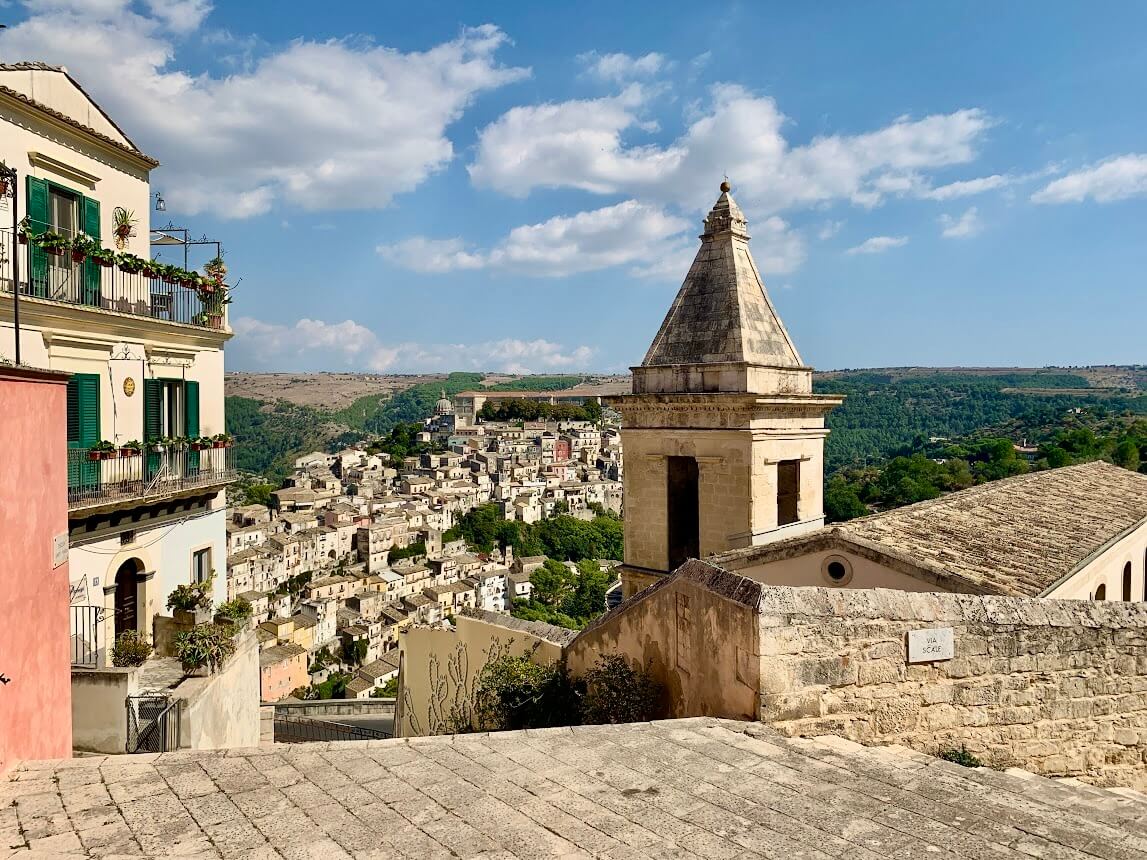 Ragusa Ibla, seen from the modern part of town.
Where to Stay in Sicily: The Western Sicily
Trapani
Trapani, the sickle-shaped port city jutting into the Mediterranean, serves as a gateway to the Egadi Islands and the salt pans that stretch south toward Marsala, their shallow basins reflecting the sky in geometric perfection.
The old town occupies a narrow peninsula, its streets running parallel to the sea, and here you will find lodgings that blend Moorish and Spanish influences: courtyards with fountains, wrought-iron balconies, walls painted in shades of terracotta and cream.
I'd recommend staying near the end of the peninsula, where the sunset transforms the sea into molten copper, or near Lungomare Dante Alighieri, which is where most of the restaurants are.
Erice
From Trapani, the cable car ascends to Erice, a medieval fortress-town perched at 750 meters on Monte San Giuliano.
The town's hotels and convents-turned-guesthouses offer rooms with stone fireplaces and views that, on clear days, extend across the salt pans to the Egadi archipelago and the Tunisian coast beyond.
In the evenings, the mist erases the world below. The only sounds are your footsteps echoing off the Norman castle's walls and the tolling of church bells marking the hours.
This is not a place for those seeking vibrant nightlife or coastal swims; it is a retreat for contemplation, a perch from which to observe Sicily's western reaches with the detachment of a raptor.
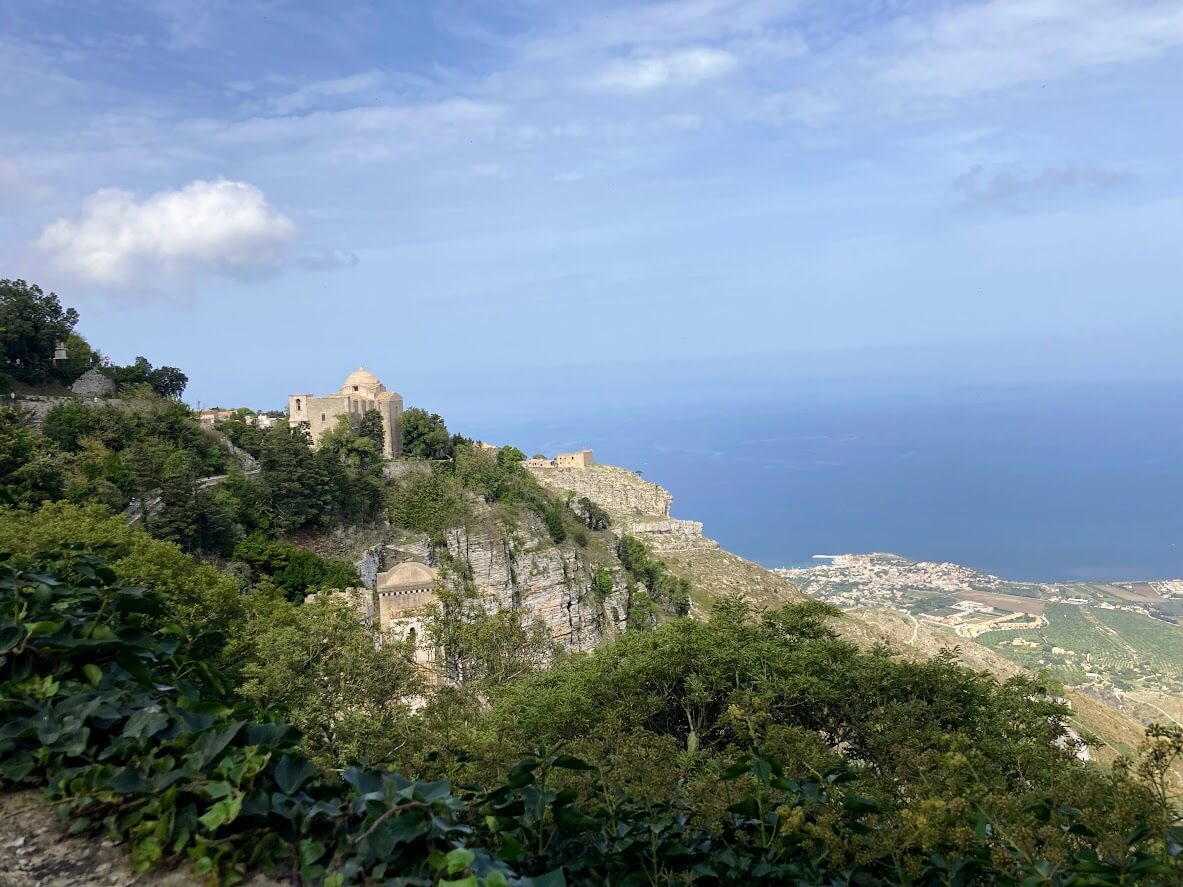 Erice castle and view.
Where to Stay in Sicily: South Coast
Agrigento
Agrigento is situated on the southern coast. The modern city sprawls across the hillside, and the Valley of the Temples—that stupendous alignment of Doric columns dating to the fifth century BC—lies below, facing the sea.
You can stay in hotels in the old town or at places scattered between the temples and the shore, like Villa Athena. Or, stay closer to the beaches - but further from the temples and town - in places like Foresteria Baglio della Luna.
Sciacca
The southern coast offers another option for those drawn to less-visited beaches and fishing villages: Sciacca. In this working port town, thermal springs bubble from the earth and ceramic workshops line the streets.
The accommodations here lack pretension—family hotels, modest B&Bs—but the authenticity compensates. The town serves as a base for exploring the Pelagie Islands or the archaeological site of Selinunte, whose ruined temples stand on a windswept promontory facing Africa.
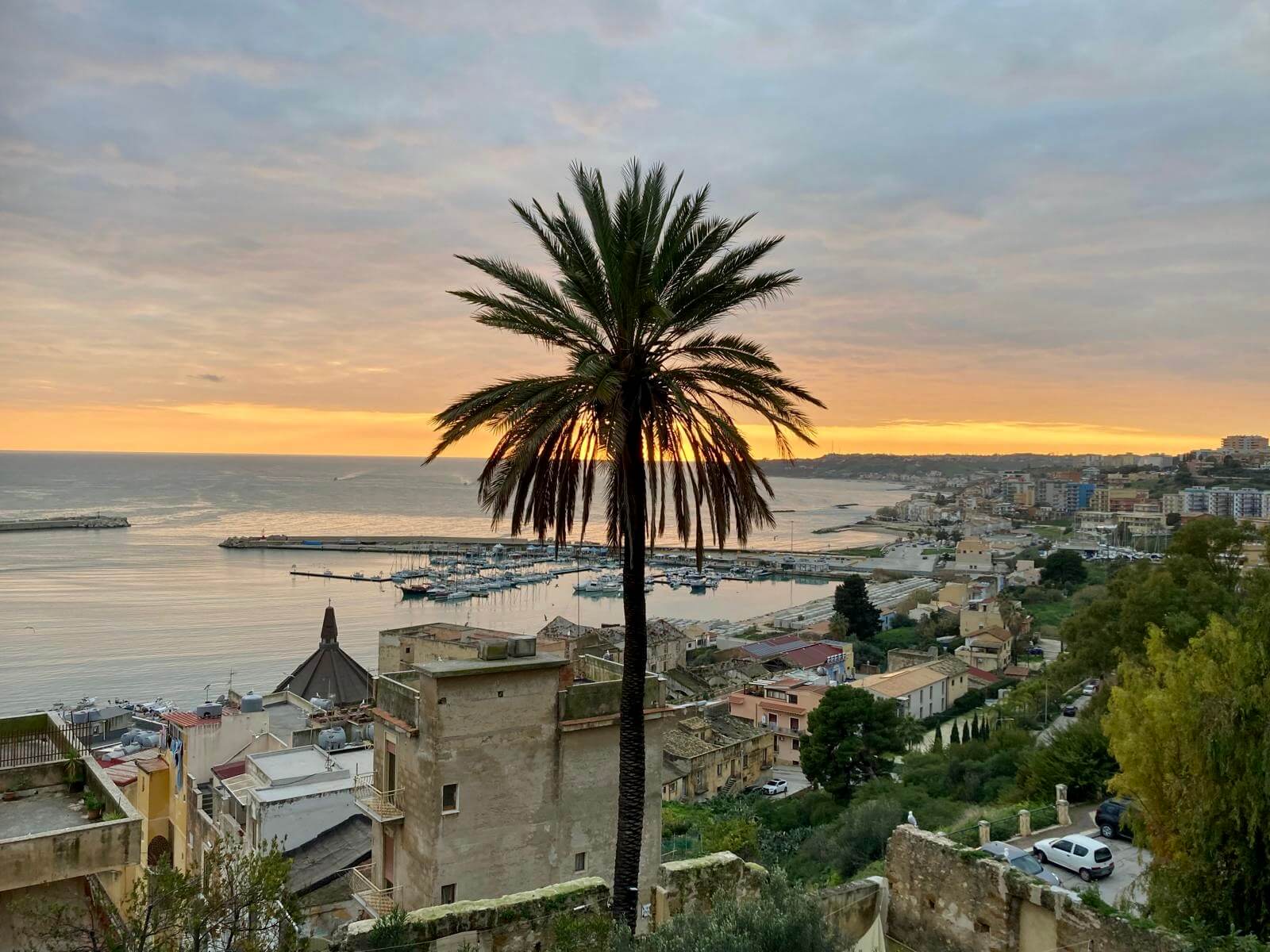 Sunset in Sciacca.
Where to Stay in Sicily: Aeolian Islands
The Aeolian Islands, that volcanic archipelago north of Milazzo, deserve mention for those whose Sicilian sojourn includes island-hopping.
Lipari, the largest, offers the broadest range of accommodations, from waterfront hotels to hillside villas with infinity pools overlooking the Tyrrhenian's cobalt depths.
Salina, greener and quieter, attracts those seeking pastoral peace among its vineyards and caper fields.
At the same time, Stromboli—with its perpetually erupting volcano—draws the adventurous to guesthouses where the night sky pulses red with each explosion.
The Aeolian Islands are best visited from late spring to early autumn, when the sea is glassy and the air is scented with broom flower. Outside the season, rough seas can make it difficult to travel between the islands and to the mainland.
Where to Stay in Sicily: Conclusion
The question of where to stay in Sicily ultimately hinges on your temperament and intentions. Do you crave the urban intensity of Palermo, where history's layers compress into a dense, dissonant symphony?
Or do you prefer Taormina's theatrical beauty, despite its tourist-thronged streets? Does Syracuse's archaeological gravitas call to you, or Ragusa's baroque perfection?
Will you chase beaches and island sunsets, or retreat to mountain villages where the modern world feels distant and provisional?
I cannot answer for you, but I can offer this counsel: avoid the trap of trying to see everything in a single visit. Sicily rewards depth over breadth, immersion over checklist tourism.
Approach each morning with curiosity, each evening with gratitude. Walk more than you drive. Eat in the trattorie where locals outnumber tourists. Sit in piazzas and watch the light change. Allow the island's rhythms—slower, more cyclical — to set the pace for your journey.
(November 27, 2025)
You might like these:
Sicily Weather Around the Year
Sicily weather around the year. What to expect, when and where.
Is Sicily Safe to Travel? Tips to Ensure a Safe Trip
Is Sicily safe to travel? From navigating transportation to avoiding tourist scams, we've got you covered.
Best Time to Visit Sicily: Your Seasonal Guide
Find the best time to visit Sicily. Explore seasonal weather, crowds, prices, and highlights.
Weather in Sicily in January - What to Expect, How to Prepare
Weather in Sicily in January - Tips for making the most of your winter vacation
Symbol of Sicily: Unveiling the Past, Embracing the Future
Trinacria - The Symbol of Sicily: A delve into its rich history and cultural significance


Want more Sicily like this?
I post short cultural threads and decision-filters for slow travelers—so you can choose experiences without spiraling.
Follow:
Contact: vesa@manyfacesofsicily.com
Recent Articles


-
Markets in Palermo: Which Fits Your Day Best?
Jul 22, 26 03:54 PM
 Choose the right markets in Palermo, from Ballarò’s full sensory rush to Il Capo’s easier flow, plus what to eat and when to go.
 -
Things to do in Catania for a Slower Stay
Apr 12, 26 02:00 PM
 Use this honest guide to things to do in Catania if you want Sicily to feel lived-in, beautiful, and easier to navigate without overplanning.
 -
Things to Do in Palermo (Go Slow, Choose Well)
Mar 24, 26 01:14 PM
 Things to do in Palermo, curated for slow days: choose markets vs. museums, sea walks vs. catacombs, plus Monreale, Mondello, and Cefalù by train.