Leonardo Sciascia
- Home
- Main Cities in Sicily
Main Cities in Sicily: A Calmer Way to Choose Your Base
You've probably already read three different articles telling you to go to Palermo, four more suggesting Taormina, and at least one Reddit thread where someone insists the only "real" Sicily is a village you've never heard of with a population of 400.
If you're stuck on how to choose a base town for a visit to Sicily, you don't need another ranked list—you need a simple way to match your pace, logistics, and idea of beauty to the right region.
This guide breaks down the main cities you'll actually consider as a longer-stay traveler, with clear trade-offs rather than hype.
By the end, you'll know which city fits the stay you're imagining—and why.
Table of Contents
2. Palermo: Urban Pulse and Golden Cathedrals
4. Syracuse: The Greek City That Never Forgot
5. Taormina: The Beautiful Trap (and Why That's Not the Whole Story)
6. Trapani and the West: The Quieter Coast
7. Agrigento and Cefalú: Worth Knowing
8. How to Choose: A Simple Decision Filter
Want more Sicily like this?
I share short cultural threads and calm decision-filters (the kind that reduce planning noise and help you choose experiences that fit slow travel). Follow here:
- Tumblr
- Bluesky
- Instagram
- Facebook
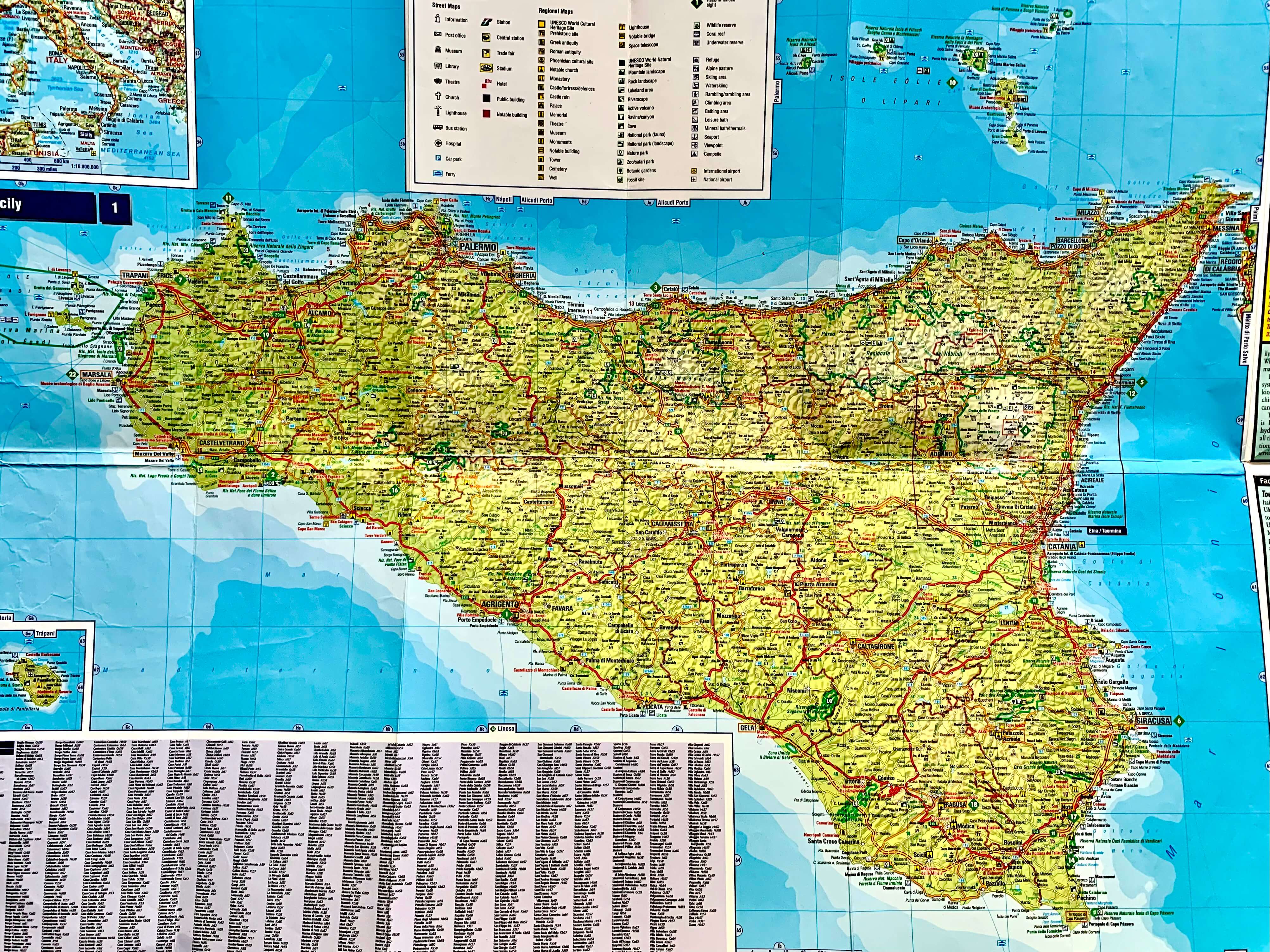
1. Different Areas of Sicily
The island is divided into nine provinces, each centered on a capital city.
When people talk about the regions of Sicily, they're often referring to these provincial zones—western, eastern, northern, southern, and interior—each with its own climate, dialect, and travel profile.
Choosing a base city means choosing a region, and choosing a region means choosing a pace, a landscape, and a version of Sicilian life.
This guide covers the main cities in Sicily that you'll most likely consider as a longer-stay traveler: Palermo, Catania, Syracuse, Taormina, Agrigento, Trapani, and Cefalù.
For each one, you'll find a sense of the place, an honest account of its trade-offs, and a clear signal about who it suits best.
2. Palermo: Urban Pulse and Golden Cathedrals
On a Tuesday morning in the Ballarò market, the sound arrives before the image: vendors calling prices in a cadence that descends from Arabic street-market tradition, fish laid on beds of crushed ice that catch the early light, the smell of frying panelle drifting from a cart near the edge of the square.
With all its sensory overload, Palermo can feel overwhelming at first. But behind the crowds and sounds is a city that refuses to perform a curated version of itself. In the long run, daily life, in all its variety, also makes it a rewarding base.
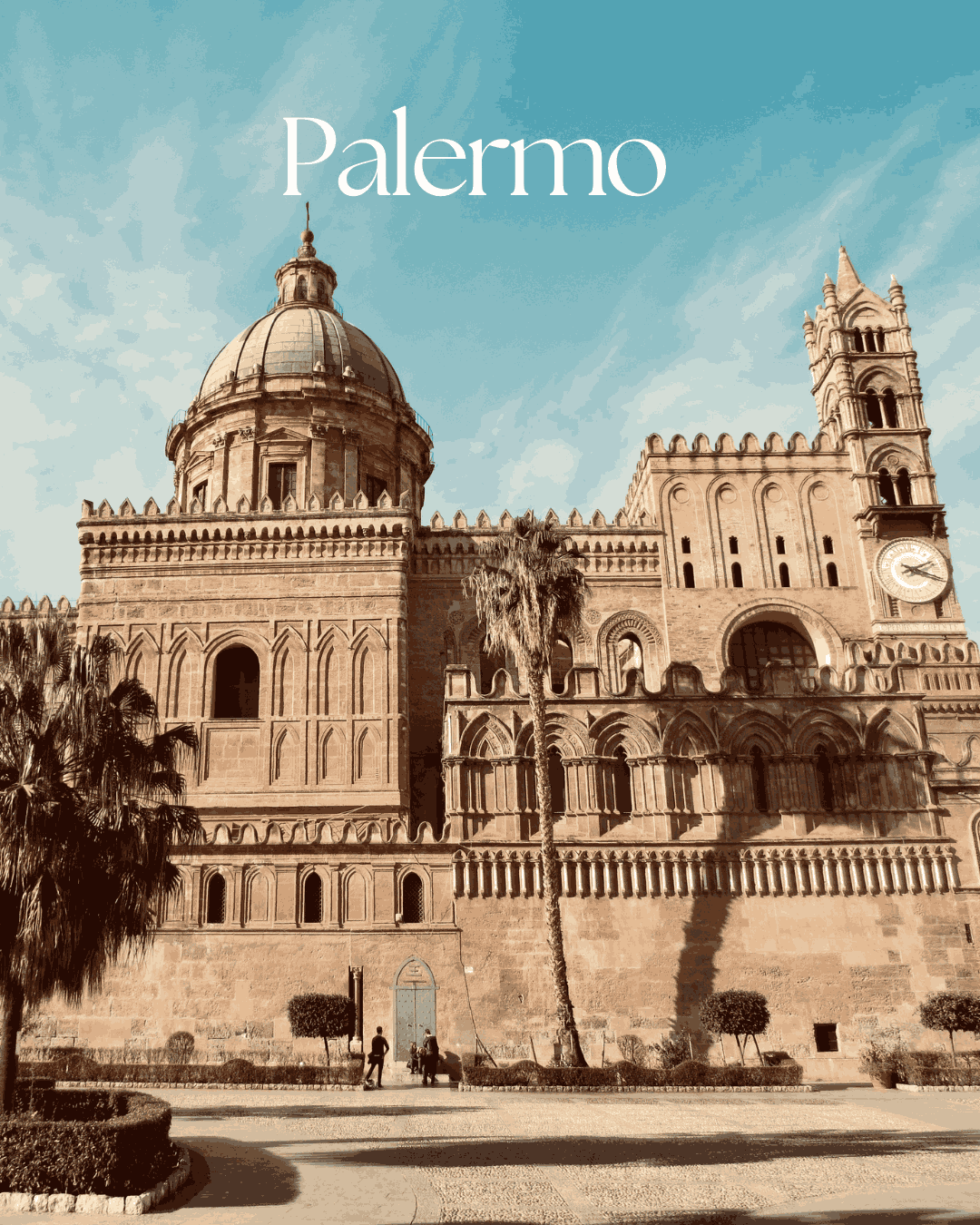
Palermo is the island's capital and its largest city, with a metropolitan population of around 650,000. It sits on the northwestern coast in a fertile basin called the Conca d'Oro, the Golden Shell, named for the citrus groves that once surrounded it.
The city's history is a compressed archive of Mediterranean civilization: Phoenician port, Roman province, Arab emirate, Norman kingdom, Spanish viceroyalty. Each era was built on top of the last rather than erasing it.
Decay and grandeur exist in the same block, sometimes in the same building—a baroque palazzo with a collapsed interior courtyard next to a perfectly restored church.
It can look like neglect at first, but you could also see it as part of the deal in a city that has survived too much history to be tidy about it.
For a solo traveler planning a longer stay, Palermo offers the most complete daily life of any city on the island. There are neighborhoods with grocery stores, laundromats, coffee bars, and a public transit system that, while imperfect, covers the city.
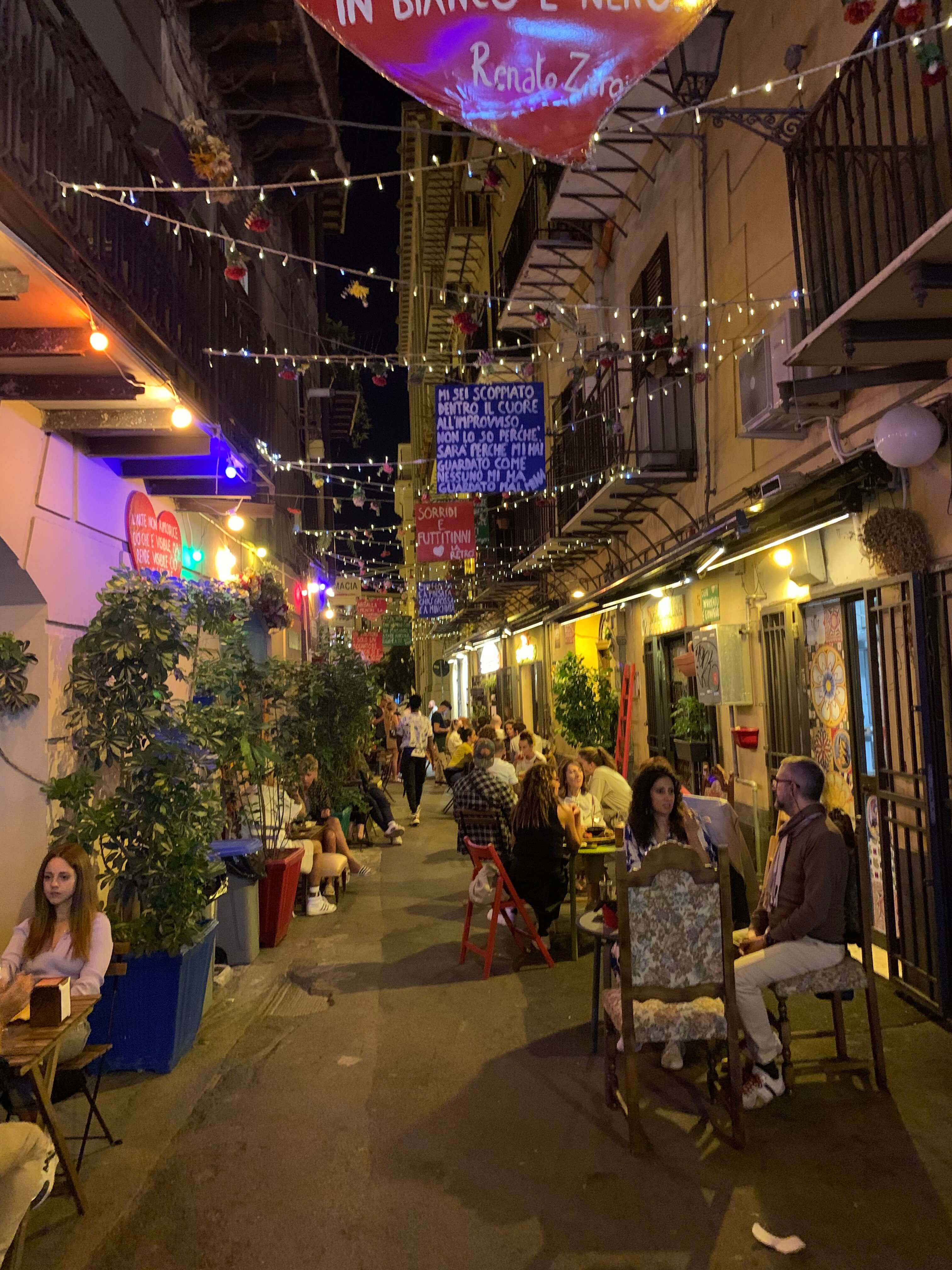 Eating out in Palermo.
The aperitivo culture is genuine and unhurried. The restaurant scene ranges from street food at Ballarò to serious cucina at places that don't advertise in English.
The question people ask about Palermo is usually some version of: is it safe?
As a large Italian city, Palermo has its share of safety problems, though not as much as, say, Rome or Milan. Mostly, you can avoid these by using common sense - for example, not being alone and heavily intoxicated in shady neighborhoods at night.
Palermo also has its share of poverty, so openly wearing expensive jewelry, especially at night, can attract petty theft. (And I don't need to say anything about keeping your wallet in a safe place in crowded areas, right?)
The city has changed significantly since the 1990s, and the cultural investment in its historic fabric—UNESCO recognition, restored piazzas, and a growing arts scene—reflects a city actively reclaiming itself.
Palermo suits you if you want density, history, and the feeling of being inside a living city rather than visiting a preserved one. It is the right base if you plan to use it as a hub for day trips west toward Trapani or east toward Cefalù, and if you want the option of a serious urban evening—a concert, a late dinner, a walk through lit baroque streets—alongside quieter days.
3. Catania: Working Chaos
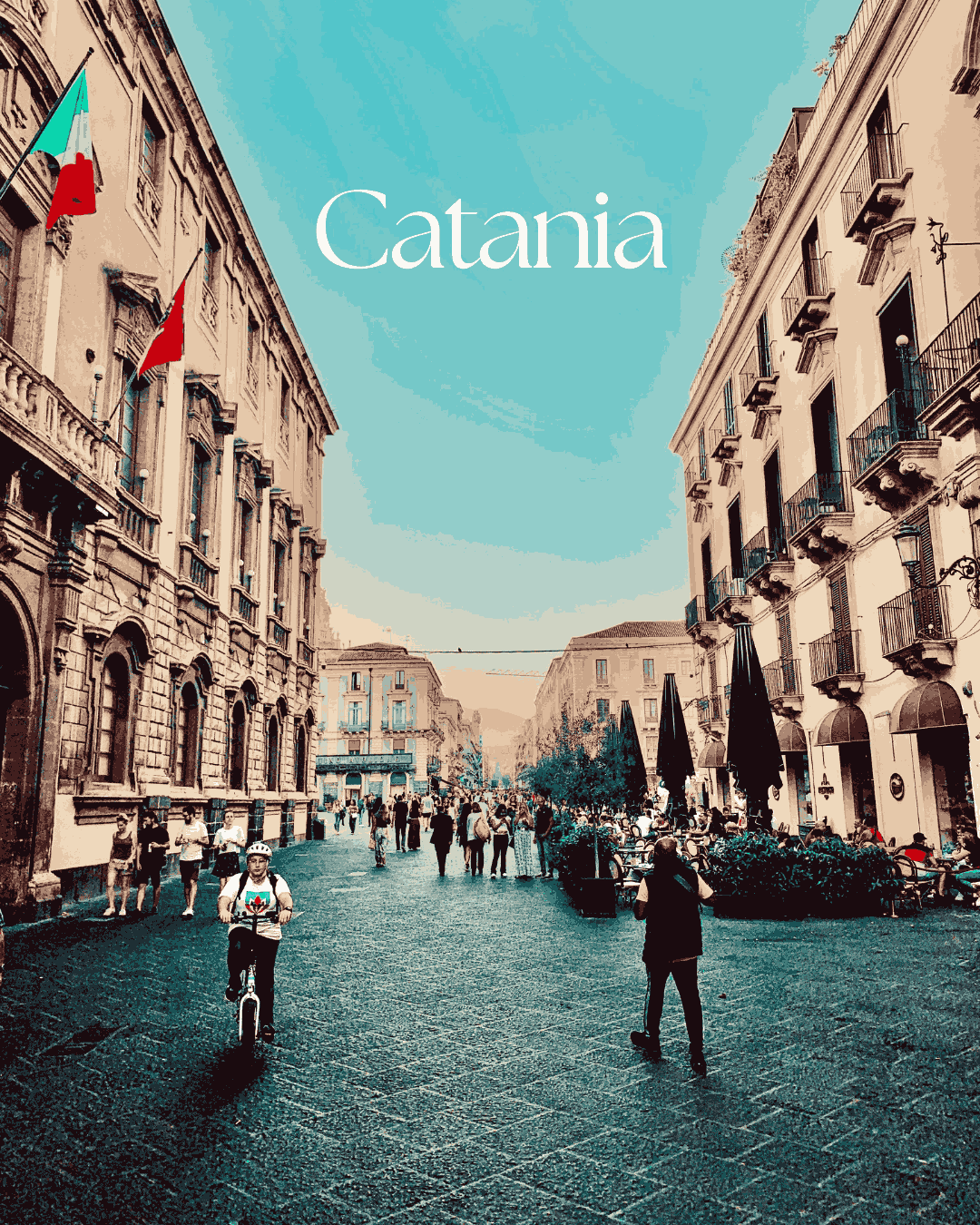
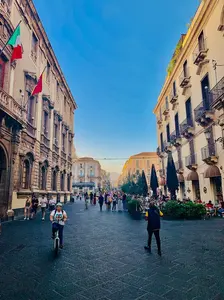
Catania sits at the foot of Mount Etna on the eastern coast, and the volcano is not background scenery—it is the city's organizing fact. The baroque buildings lining the Via Etnea are built of lava stone. This dark grey gives the city a different visual register than the warm ochres of Palermo.
When Etna is clear, you can see it from the central piazza, rising above the roofline with the particular authority of something that has destroyed this city twice and will likely do so again.
The 1693 earthquake leveled Catania, and the city was rebuilt in a single generation, giving it an unusual architectural coherence. The baroque here is not accumulated over centuries but designed as a system—wide streets, grand piazzas, uniform building heights, all planned to allow crowds to evacuate quickly in the event of another disaster.
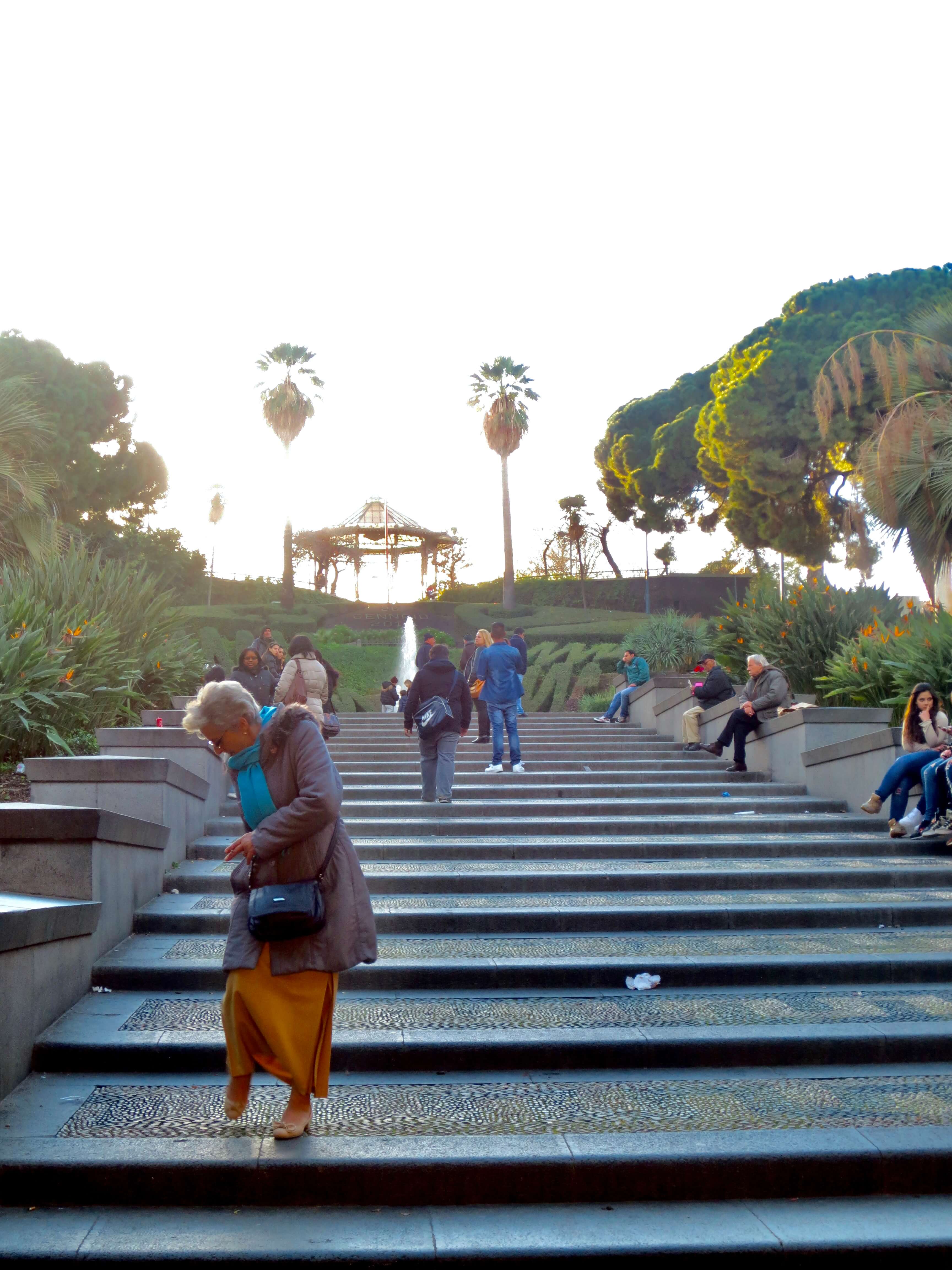 Parklife in Catania.
Catania is Sicily's second-largest city and its most economically active. It has a major university, a functioning port, a serious food market—the Pescheria, one of the best fish markets in Italy—and a nightlife culture that runs later and louder than anywhere else on the island. It is a city that moves, that has traffic and ambition and a certain impatience that feels more continental than Mediterranean.
For remote workers, Catania offers practical advantages that other Sicilian cities don't match: reliable infrastructure, a growing number of co-working spaces, good connectivity, and an airport with direct flights to major European hubs. The cost of living is lower than in Palermo and significantly lower than in northern Italy.
Catania suits you if you want a city that functions—where the daily logistics of longer-term living are manageable—while still offering the sensory richness and historical depth that make Sicily worth staying in. It is the right base if you plan to spend time in the Etna region, the Val di Noto baroque towns to the south, or the Ionian coast.
It is not the right choice if you want quiet, slow mornings and no urban noise.
4. Syracuse: The Greek City That Never Forgot
Syracuse was once the largest city in the ancient Greek world, larger than Athens at its peak, and the memory of that history remains in the stone.
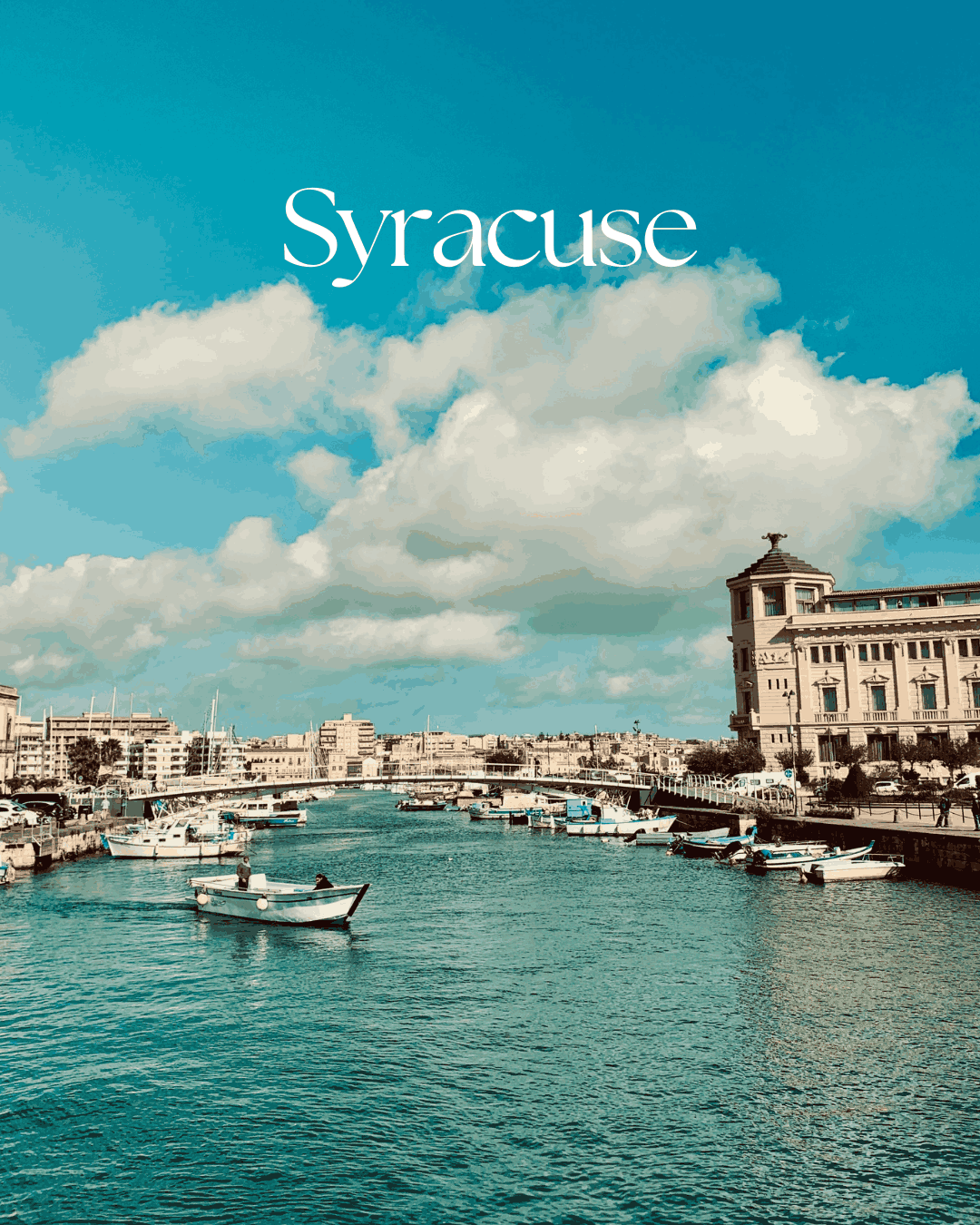
The island of Ortigia—the ancient city center, connected to the modern mainland by two short bridges—is one of the most beautiful urban spaces in the Mediterranean. Its streets are narrow limestone corridors that open without warning onto baroque piazzas, the sea visible at the end of nearly every eastward street.
The Greek theater at Syracuse, carved directly into the hillside above the city, still hosts performances in summer. Sitting in those stone seats at dusk, watching the light change over the limestone, you understand something about the continuity of this place that no museum can convey. The theater has been in use, in various forms, for 2,500 years.
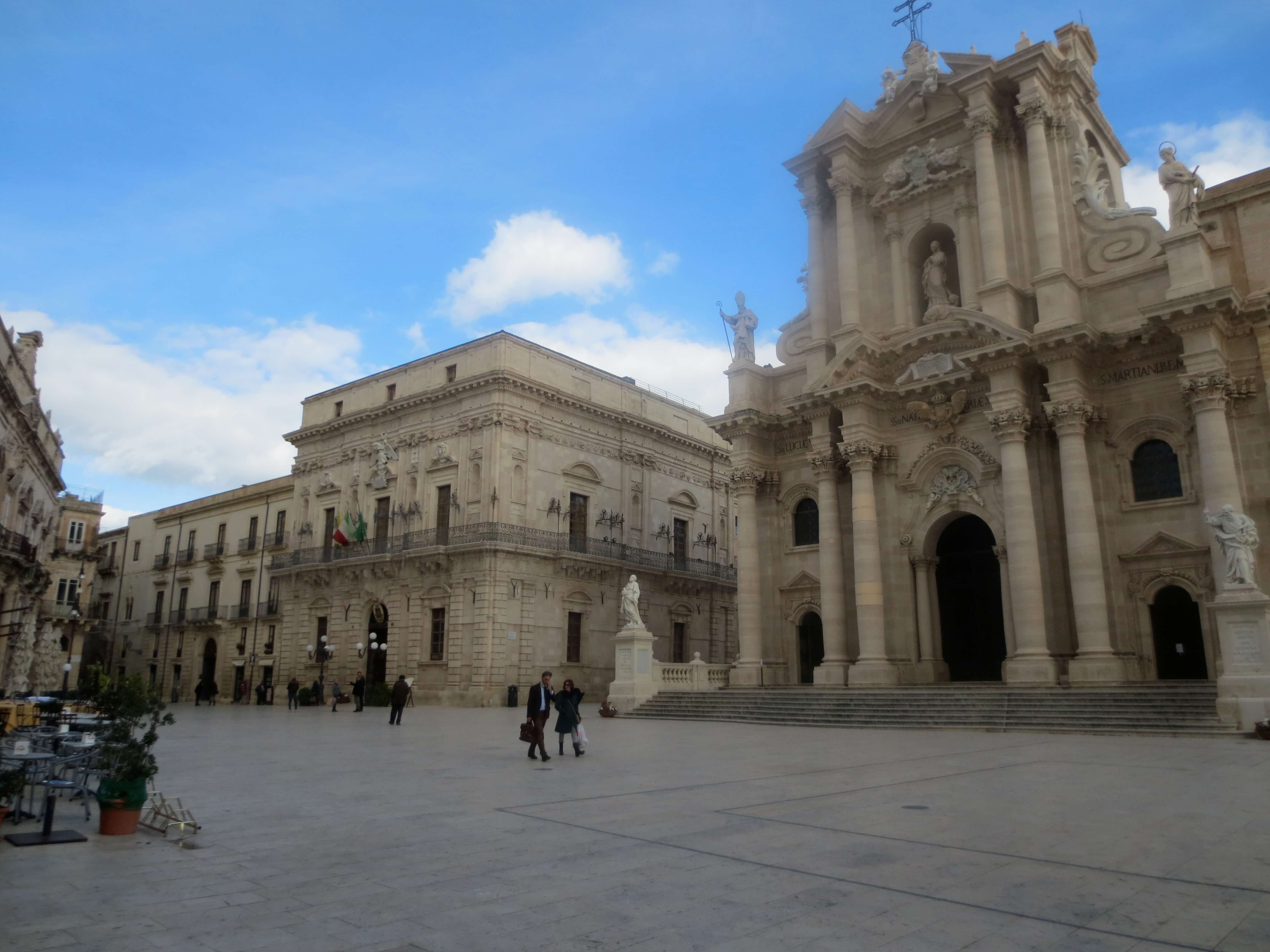 Piazza Duomo in Syracuse.
Ortigia is small enough to walk entirely in an afternoon. Still, it rewards the kind of slow attention that reveals detail over time. The Cathedral of Syracuse was built inside a Greek temple—the ancient columns are still visible, incorporated into the baroque facade.
The Temple of Apollo, the oldest Doric temple in Sicily, stands in a piazza where people park their scooters and buy groceries. The ancient and the everyday occupy the same space without ceremony.
For a longer stay, Syracuse offers a quality of life that is genuinely rare. It is a small city—around 120,000 people—which means it has the services and cultural life of a real urban center without the noise and density of Palermo or Catania.
The pace is slower, the evenings quieter, and the relationship between residents and visitors more relaxed. The food scene is brilliant, and the local wine culture draws on the volcanic soils of the nearby Etna and Noto regions.
Syracuse suits you if you want history as a daily texture rather than a weekend excursion, and if the idea of walking to a Greek temple on your way to buy bread sounds like the right kind of morning.
It is the right base if you want access to the southeastern corner of the island—the Val di Noto, Ragusa, Modica—without having to be in a larger, much noisier city like Catania.
5. Taormina: The Beautiful Trap (and Why That's Not the Whole Story)
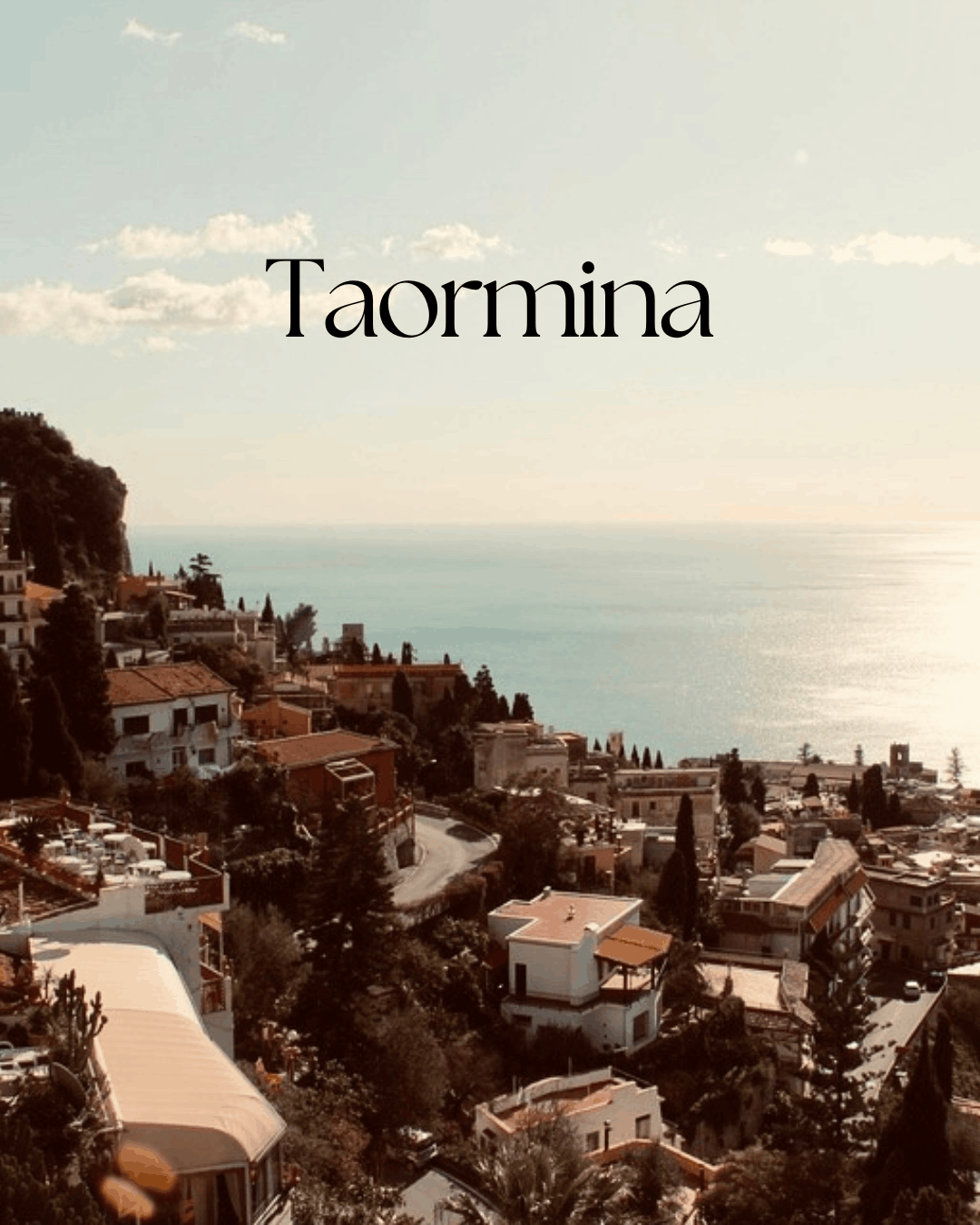
Taormina is perched on a cliff above the Ionian Sea, with a Greek theater that frames Etna on one side and the coastline on the other. The view from that theater is, without exaggeration, one of the most composed natural and architectural scenes in the world. It has been painted, photographed, and written about for two centuries, which is precisely the problem.
Taormina has been a destination for wealthy northern European travelers since the nineteenth century, and the town has organized itself around that fact. The Corso Umberto, the main pedestrian street, is lined with boutiques, gelato shops, and restaurants that cater to the cruise-ship crowd. In July and August, the population swells to a degree that makes the streets feel less like a Sicilian town and more like a theme park version of one.
Outside of peak season—from October through May—Taormina recovers something of its original character. The light in autumn is extraordinary, the crowds thin to a manageable level, and the town's genuine beauty, which is real and not manufactured, becomes accessible again. The Greek theater in winter, with Etna dusted in snow and the sea below, is one of those images that stays with you.
For a longer stay, Taormina is a difficult base. It is expensive, small, and oriented almost entirely toward short-term tourism. The practical infrastructure of daily life—a real market, a neighborhood bar, the texture of ordinary Sicilian routine—is largely absent. It is better understood as a place to spend two or three nights, or as a day trip from Catania, which is forty minutes south.
Taormina suits you if you want a concentrated dose of beauty and are traveling in the shoulder season. It does not suit you as a base for a longer stay unless you have a specific reason—a rental property, a writing retreat, a particular attachment to the place—that overrides the practical limitations.
6. Trapani and the West: The Quieter Coast
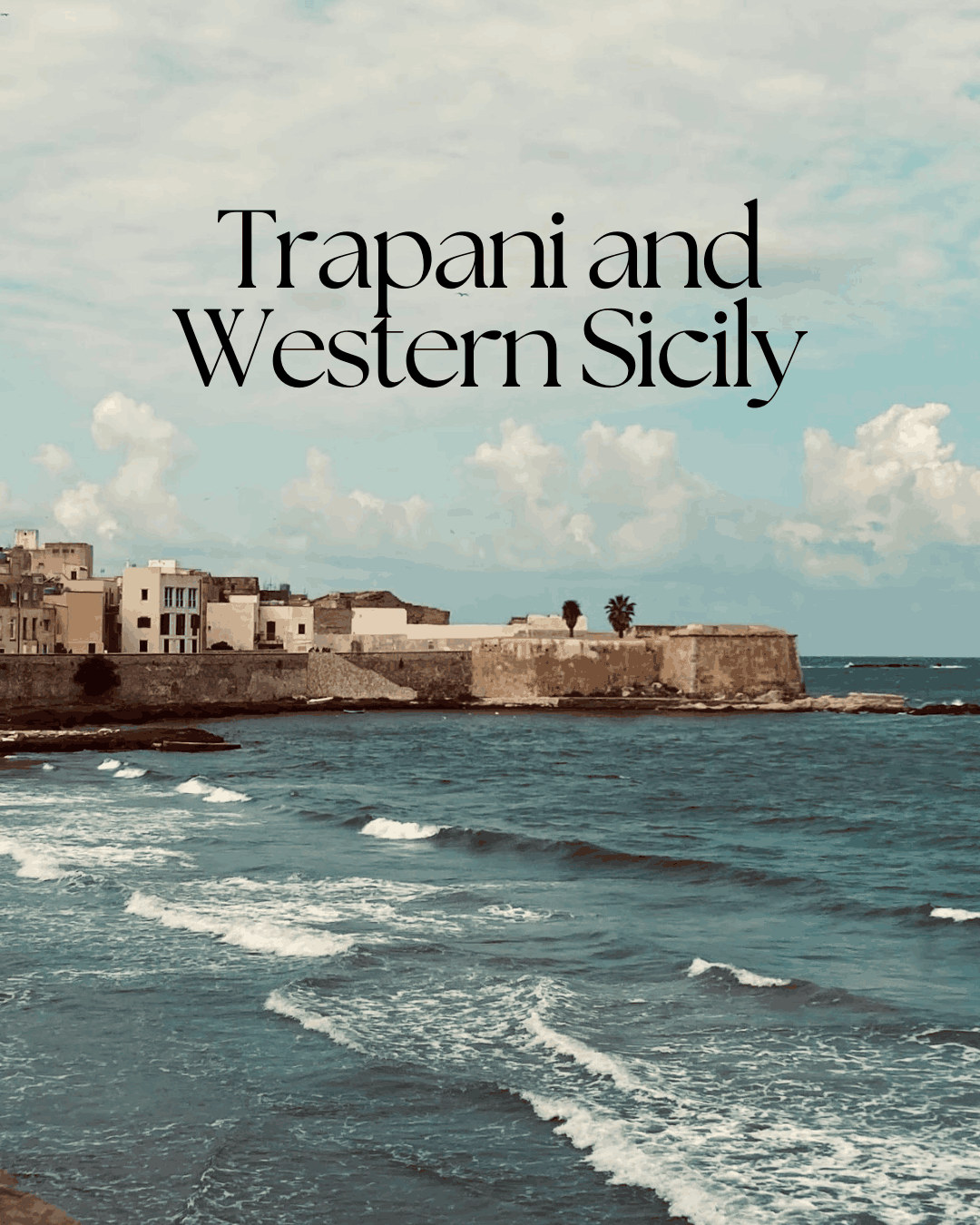
Trapani sits on a narrow peninsula on the western tip of Sicily, pointing toward Tunisia like an outstretched finger. The city is often overlooked in favor of Palermo or the eastern coast, which is exactly why it rewards the traveler who finds it.
The historic center is compact, the pace is genuinely slow, and the relationship between land and sea—salt flats, windmills, the Egadi Islands visible on clear days—has a particular quality that feels more North African than Italian.
Trapani is a working port city with a real local life. The fish market, the evening passeggiata along the lungomare, and the couscous tradition, which reflects centuries of Arab and North African influence, are part of the texture of the place. The city's signature dish, couscous al pesce, is a direct inheritance from the Arab period and from the ongoing relationship with North Africa, made inevitable by geography.
For a longer stay, Trapani offers affordability and authenticity in combination, a combination increasingly rare in Sicily. It is not a city with a major cultural program or a dense restaurant scene. Still, it has enough to sustain a month or two, particularly if you use it as a base for the surrounding province—Erice on the hill above the city, the Egadi Islands by ferry, the temples at Segesta, the salt road south toward Marsala.
Trapani suits you if you want the western regions of Sicily, a slower pace than Palermo, and a city that hasn't yet organized itself around the tourist gaze. It is the right choice if the idea of watching the sun set over the salt flats from a bar where nobody speaks English sounds like exactly enough.
7. Agrigento and Cefalù: Worth Knowing
Agrigento is known almost entirely for the Valley of the Temples, and the temples deserve that attention. The row of Doric columns along the ridge above the modern city, lit gold in the late afternoon, is one of the great archaeological sites in the world—not as a ruin but as a presence, a place where the scale and ambition of Greek civilization becomes physically comprehensible.
The modern city of Agrigento, however, is not a comfortable base for a longer stay. It is a mid-sized Sicilian city with significant economic challenges, limited tourist infrastructure outside the archaeological zone, and a character that is more functional than beautiful. The temples are worth a full day, ideally two, but Agrigento works better as a destination than a home base.
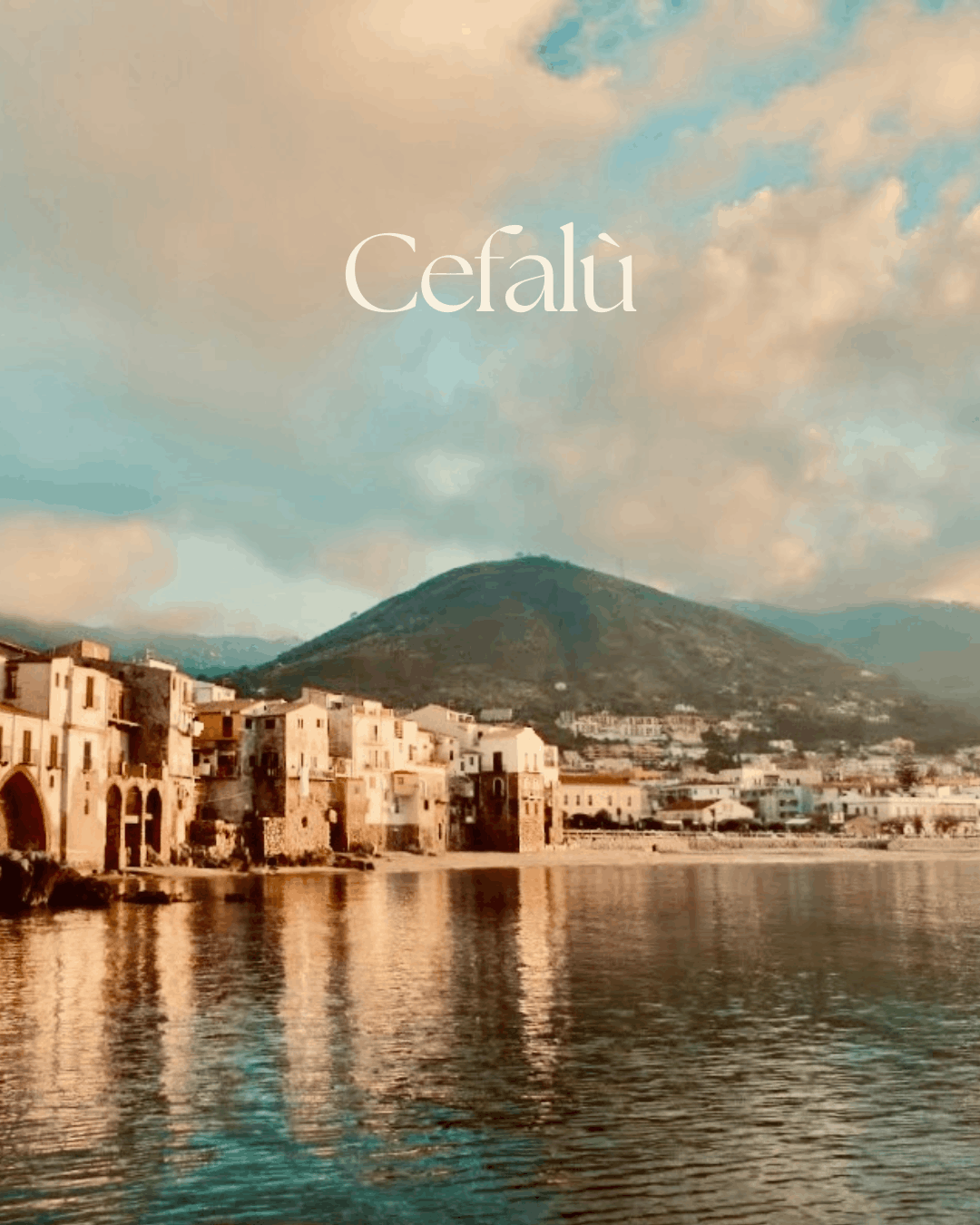
Cefalù, on the northern coast between Palermo and Messina, is a different case. The medieval town climbs a dramatic rock above a Norman cathedral, and a long sandy beach, and the combination of architecture, landscape, and sea access makes it one of the most visually complete towns in Sicily. It is small—around 14,000 people—and in summer it fills with Italian and European vacationers.
Outside of summer, Cefalù is genuinely lovely and genuinely quiet. It is close enough to Palermo (an hour by train) to use as a base while accessing the capital's resources. It offers a quality of daily life—the beach, the cathedral, the small market, the evening light on the Norman stonework—that is hard to find elsewhere.
For a traveler who wants beauty and quiet over urban density, Cefalù in the shoulder season is one of the best-kept practical secrets on the island.
8. How to Choose: A Simple Decision Filter
First: Do you want urban density or daily quiet? If you want the feeling of being inside a city—traffic, markets, strangers, noise, the full texture of a place that doesn't notice you—Palermo or Catania.
If you want to hear your own footsteps on limestone at nine in the morning, Syracuse, Cefalù, or Trapani.
Second: How important is practical infrastructure for remote work or a longer stay? If reliable Wi-Fi, co-working options, an international airport, and a cost of living that doesn't punish you for staying a month are high priorities, Catania is the most straightforward answer.
Palermo is a close second, with a growing remote-work community and co-working spaces like MoltiVolti that double as cultural hubs.
Syracuse and Trapani are workable but require more self-sufficiency—you'll need a good apartment with good internet rather than relying on public spaces.
Third: What version of beauty do you want around you every day? This is the question people skip, and it matters more than they think.
Palermo's beauty is chaotic and layered—you find it in the collision of eras, in a crumbling courtyard with bougainvillea growing through the cracks.
Catania's beauty is darker and more structured, volcanic stone and wide baroque avenues under the shadow of Etna.
Syracuse's beauty is ancient and intimate, Greek columns next to someone's laundry line.
Trapani's beauty is horizontal—salt flats, sea light, the low geometry of a coast that faces Africa.
Taormina's esthetics are vertical and theatrical, a cliff town designed to be looked at.
Cefalù's beauty is the one that photographs best and feels most like the Sicily of your imagination.
None of these is better. They are different, and knowing which one you respond to will tell you more than any ranked list.
If you're still unsure, start with Palermo or Syracuse. Palermo if you lean toward energy, Syracuse if you lean toward stillness. Both are forgiving bases—rich enough to hold your attention for weeks, connected enough to let you explore from there, and honest enough to show you what Sicily actually is rather than what it performs for visitors.
(March 10, 2026)
Next steps (pick what you’re curious about today):
Things to Do in Palermo (Go Slow, Choose Well)
Things to do in Palermo, curated for slow days: choose markets vs. museums, sea walks vs. catacombs, plus Monreale, Mondello, and Cefalù by train.
Taormina: Is It Worth It on Your Sicily Itinerary?
Wondering if Taormina belongs on your Sicily trip? Explore beaches, shopping, and sights—then choose well.
Things to Do in Cefalu - The Ultimate Guide
Things to Do in Cefalu: An ancient fishing port with lively beach life - Learn all there is to know!
Things to Do in Syracuse, Sicily: A Cultural Journey Through Time
Things to Do in Syracuse: Discover what makes it such a great place to visit.
Things to do in Catania for a Slower Stay
Use this honest guide to things to do in Catania if you want Sicily to feel lived-in, beautiful, and easier to navigate without overplanning.


Want more Sicily like this?
I post short cultural threads and decision-filters for slow travelers—so you can choose experiences without spiraling.
Follow:
Contact: vesa@manyfacesofsicily.com
Recent Articles


-
Markets in Palermo: Which Fits Your Day Best?
Jul 22, 26 03:54 PM
 Choose the right markets in Palermo, from Ballarò’s full sensory rush to Il Capo’s easier flow, plus what to eat and when to go.
 -
Things to do in Catania for a Slower Stay
Apr 12, 26 02:00 PM
 Use this honest guide to things to do in Catania if you want Sicily to feel lived-in, beautiful, and easier to navigate without overplanning.
 -
Things to Do in Palermo (Go Slow, Choose Well)
Mar 24, 26 01:14 PM
 Things to do in Palermo, curated for slow days: choose markets vs. museums, sea walks vs. catacombs, plus Monreale, Mondello, and Cefalù by train.
