Leonardo Sciascia
- Home
- Honeymoon in Sicily
Honeymoon in Sicily: Where Ancient Meets Eternal
As you stand at the threshold of matrimony, your hand clasped in another's, I bid you to turn your gaze southward—toward Sicily, an island suspended in the Mediterranean like a pendant of volcanic glass and limestone.
There, the honeymoon you envision unfolds across terraced vineyards, crumbling temples, and coastlines that have witnessed three thousand years of lovers' vows.
This is no ordinary destination; it is a palimpsest of civilizations, each layer—Greek, Roman, Arab, Norman—inscribed upon the next. On your honeymoon in Sicily you will walk through them as newlyweds, your footsteps echoing in the chambers of history.
The island stretches approximately 25,460 square kilometers, its triangular form jutting into cobalt waters, and within that expanse lie villages clinging to cliffsides, baroque cities gilded by afternoon light, and beaches where golden sand meets turquoise surf.
Here we offer one itinerary option for a honeymoon in Sicily. You can do the whole tour in ten days or take it slower – or just pick the destinations that interest you.
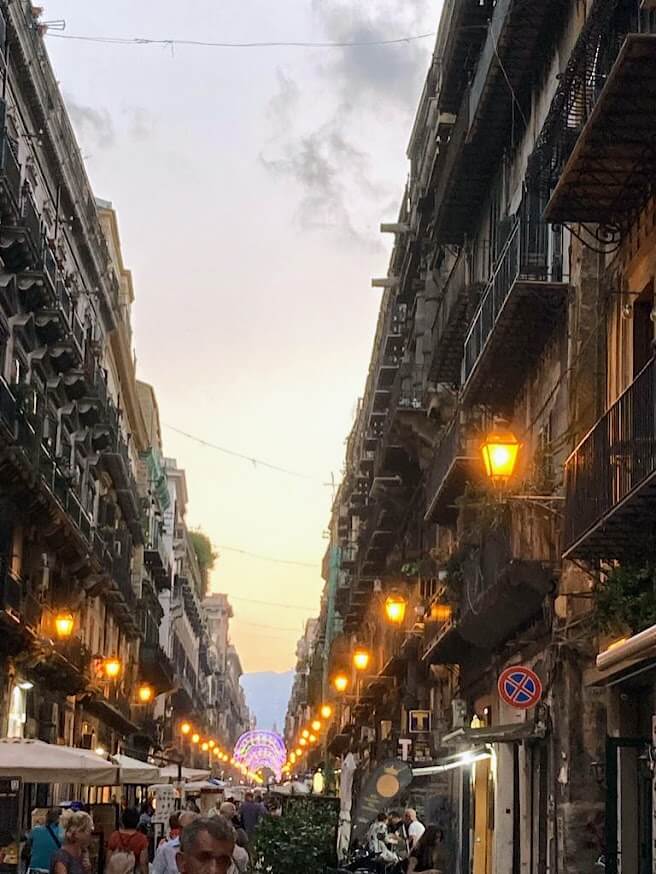 Palermo by night.
1. Palermo: City of Desires and History (2-3 Nights)
What better place to start your honeymoon in Sicily than Palermo, the island's ancient capital that sprawls beneath the limestone flank of Monte Pellegrino.
This three-kilometer-long shadowed promontory guards the Tyrrhenian shore like a petrified sentinel. The air tastes of salt and diesel, of jasmine blooming in wrought-iron cages.
Walk through the Quattro Canti, that baroque crossroads where four concave palaces lean inward, their stone saints observing your passage with eroded eyes.
The streets narrow into the Kalsa quarter—Al Halisah, they called it when Saracen emirs ruled—and the cobblestones gleam wet, though no rain has fallen; the city sweats its history, exudes a miasmic perfume of decay and orange blossom.
Enter the Cappella Palatina. Gold mosaics encrust every surface: Christ Pantocrator stares down from the dome's apex, his Byzantine face impassive, while honeycomb muqarnas—those stalactite carvings of Islamic artisans—drip from the wooden ceiling like frozen prayer.
In the wide historical center, there is no shortage of restaurants or cafes - and markets that have been in operation since the Middle Ages.
Nightlife goes on until dawn in Vucciria, year-round, as elsewhere the piazzas empty, leaving only the hum of distant scooters and the whisper of something older, something that waits.
2. Agrigento and the Valley of the Temples (1-2 Nights)
The Valley of the Temples in Agrigento stands as Sicily's most arresting archaeological site, a ridge crowned with Doric columns that have endured since the fifth century BCE.
Walk the Via Sacra in late afternoon, when the sun slants low, and the honey-colored tufa glows as if lit from within. The Temple of Concordia, among the best-preserved Greek temples, rises before you, its entablature and stylobate intact.
You may pause within its colonnade to consider the vows spoken here millennia ago, the marriages contracted and dissolved, the generations that have passed through these same spaces.
The site spans nearly 1,300 hectares; allow at least 3 hours and bring water, as the Sicilian sun shows no mercy to the unprepared.
Nearby, the Scala dei Turchi—the Turkish Steps—presents a white marl cliff sculpted by wind and water into a series of natural terraces that descend to a beach of improbable beauty.
Arrive at sunset, when the stone glows pink and orange, and wade into waters so clear you can count pebbles at three meters' depth.
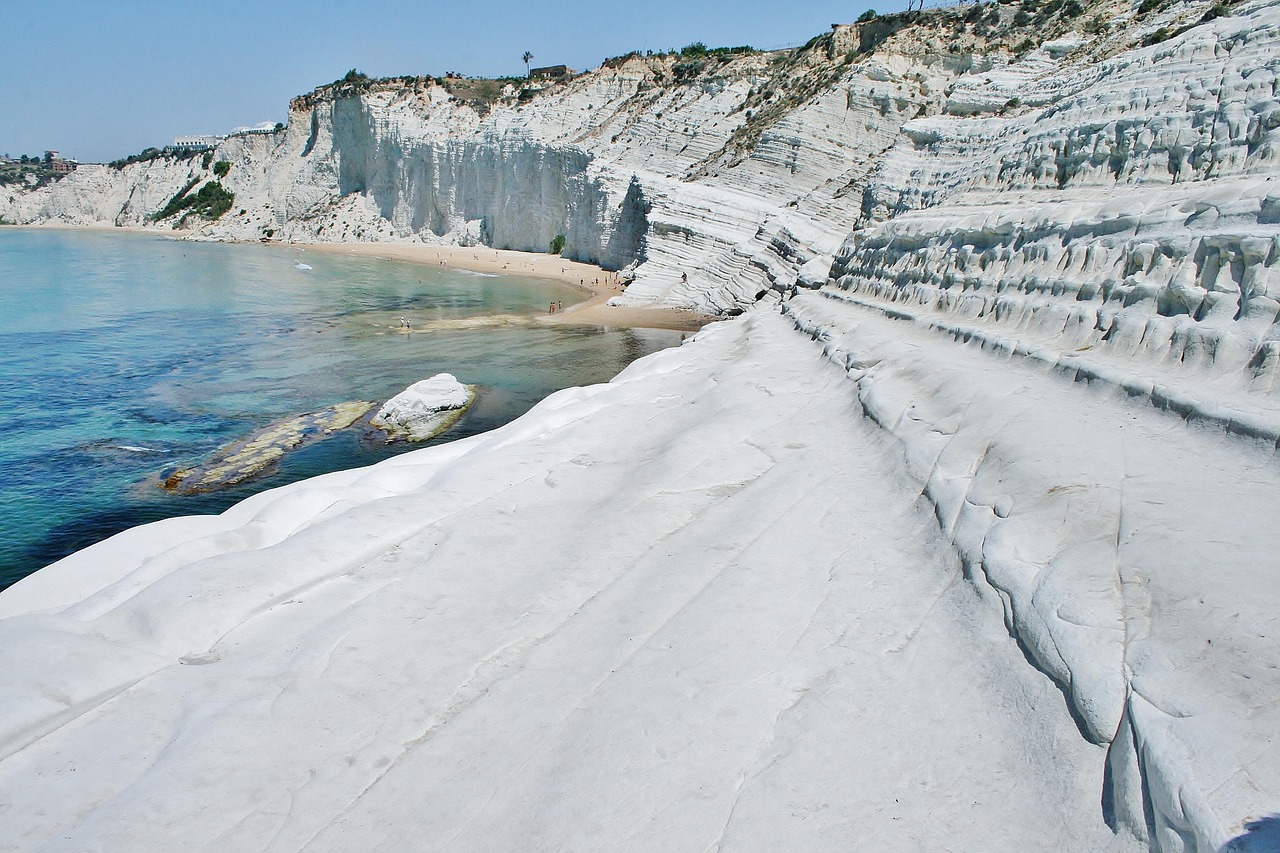 Scala dei Turchi.
3. Noto Valley: Sicily's Golden Baroque Paradise (2-3 Nights)
The baroque cities of the Val di Noto—Noto, Modica, Ragusa Ibla, Scicli—rose from the ruins of the 1693 earthquake, their architects seizing catastrophe as an opportunity to reimagine urban space in the ornate idiom of the eighteenth century.
Wander Noto's Corso Vittorio Emanuele at twilight, when the limestone facades of the cathedral and Palazzo Ducezio seem to liquefy in the golden light, their balconies and cornices dripping with sculpted cherubs and acanthus leaves.
In Modica, seek out the chocolate shops that still prepare their product according to Aztec methods introduced by the Spanish, grinding cacao with sugar at low temperatures to produce a grainy, intensely flavored bar.
Ragusa Ibla cascades down a hillside in a tumble of churches and palazzi, its streets so steep that staircases replace sidewalks.
These cities reward the patient wanderer, the couple willing to lose themselves in labyrinthine alleys and discover, around some unexpected corner. They are certainly among the best destinations for your honeymoon in Sicily.
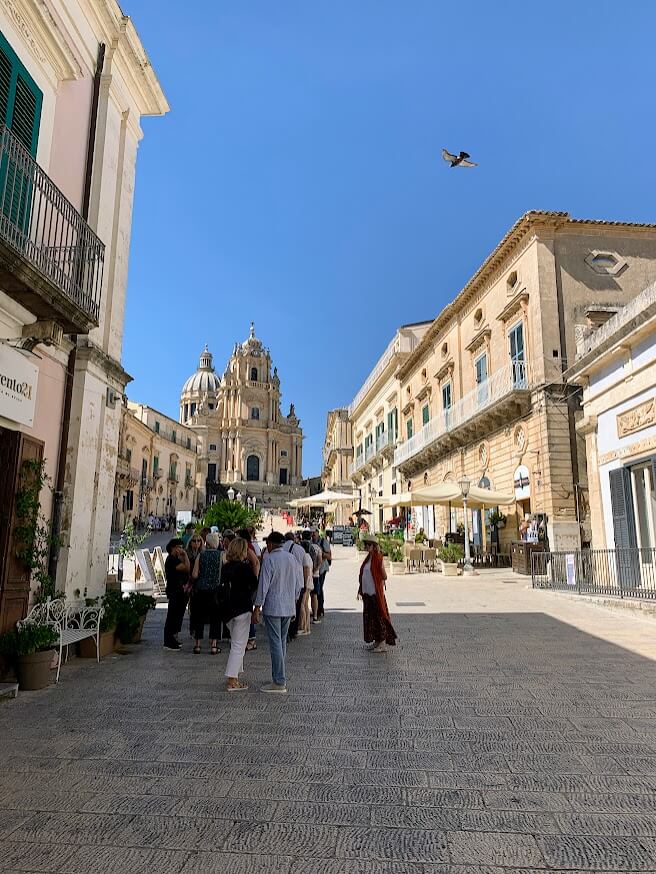 Ragusa's old town, also known as Ragusa Ibla.
4. Syracuse: Ancient Splendor and Seaside Romance (2 Nights)
Syracuse, once the most powerful city in the Greek world, rewards extended exploration. The island of Ortygia, the old town, occupies a limestone outcrop measuring barely one square kilometer. Yet, within that compact space, you will find the Temple of Apollo's fragmentary columns, the baroque exuberance of the Duomo, and many quality restaurants and cafes.
Cross the bridge to the mainland and visit the Parco Archeologico della Neapolis, where the Greek Theatre, carved from living rock, seats fifteen thousand spectators, and the Ear of Dionysius, a limestone cave with extraordinary acoustics, amplifies whispers into thunderous echoes.
Allocate two full days for Syracuse; the city's layered history demands time to absorb and contemplate.
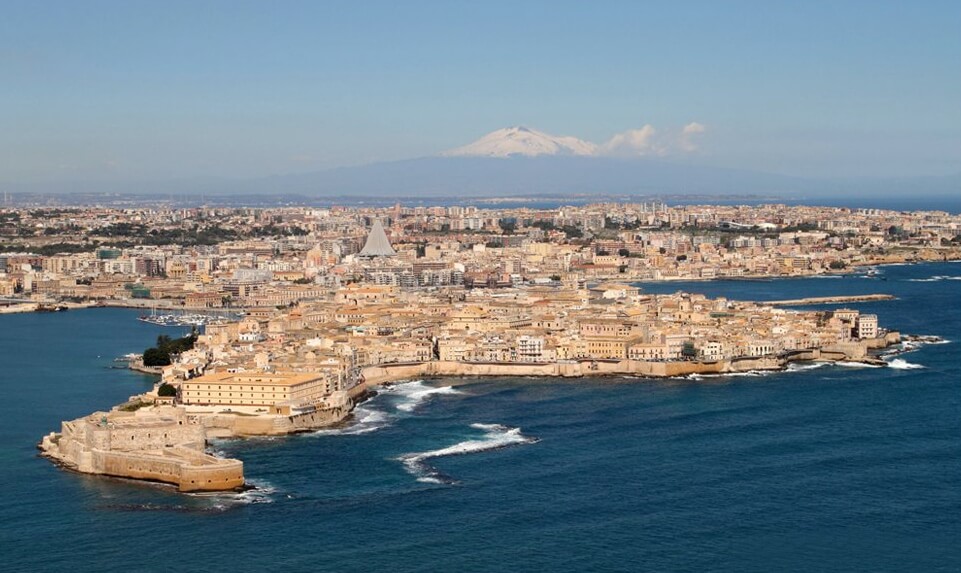 The island of Ortigia in Syracuse, on the south-east corner of Sicily. (Photo: Angelo e Giorgio Bonomo / Wikimedia Commons)
5. Taormina and Etna Wine Region: Sicily's Most Glamorous Honeymoon Destination with Views to Remember (3-4 Nights)
Taormina, perched on a terrace four hundred meters above the sea, has served as a honeymoon destination since the Grand Tour era, when northern Europeans fled their fog-bound cities for Sicily's luminous skies.
The town's Greek Theatre, constructed in the third century BCE and later remodeled by the Romans, frames Etna's cone in its stage backdrop—a juxtaposition of human artistry and geological sublime that has inspired countless vows and renewals.
Yet know this: Taormina's beauty has made it populous; in high season, cruise-ship passengers throng its boutiques and gelaterias. Seek instead the early morning hours, when the town belongs to its residents and to those few travelers wise enough to rise before the sun.
Ascend afterward to the vineyards that thrive in Etna's mineral-rich soil, where Nerello Mascalese grapes yield wines of startling elegance and depth.
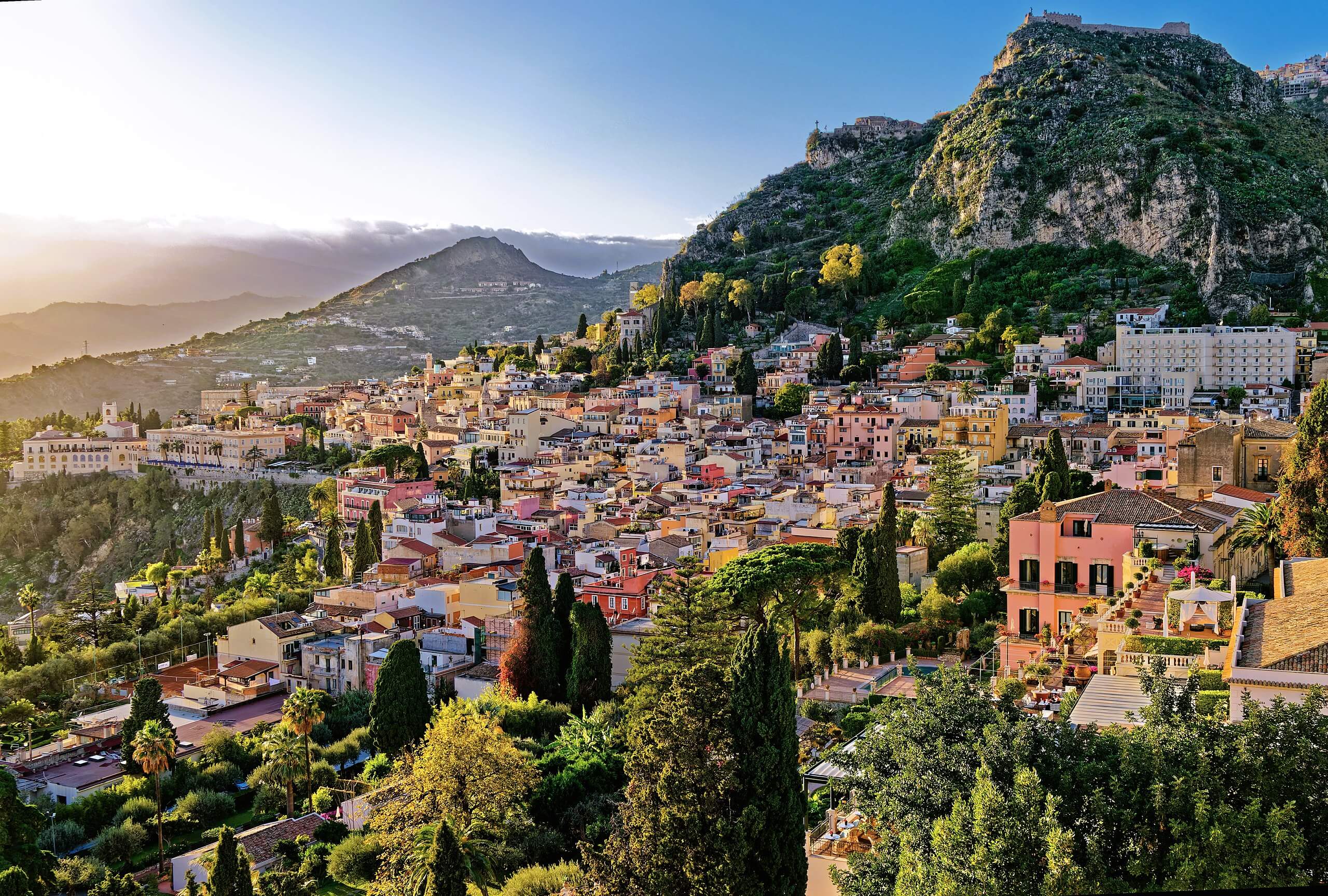 Taormina has been a tourist hotspot for three hundred years - at least. (Photo: Holger Uwe Schmitt / Wikimedia Commons)
Bonus: Aeolian Islands
The Aeolian Islands, a volcanic archipelago north of Sicily's coast, offer an escape within an escape.
Ferries and hydrofoils depart from Milazzo, and within ninety minutes you may find yourself on Lipari, the largest island, or Salina, with its twin volcanic peaks and terraced vineyards producing Malvasia delle Lipari, a dessert wine of honeyed complexity.
Stromboli, the most dramatic of the islands, erupts with metronomic regularity, its Sciara del Fuoco—Stream of Fire—visible from the sea as incandescent boulders tumble down the volcano's flank.
Book a nighttime boat tour that circles the island, and watch together as the mountain performs its ancient pyrotechnics, each explosion a reminder of the forces that shape and reshape this corner of the world.
The islands' remoteness and their lack of mass tourism create a sense of privileged access, as if you have stumbled upon a secret known only to initiates.
Where You Sleep, What You Do
Seek not merely the sterile gleam of five-star insignia but boutique hotels with their own character.
In Taormina, the clifftop rooms open their shutters to the Ionian's blue immensity—balconies where morning light climbs from the water and Etna's silhouette broods on the western horizon.
In Ortigia, ask for the same: sea-view rooms carved into the island's limestone heart, windows framing the harbor's slow procession of fishing boats and the distant curve of mainland Syracuse. Not just rooms, but thresholds.
But a honeymoon is more than just rooms and houses, so what will you do with these days?
Charter a private boat at sunset and drift around Ortigia's limestone flanks or north toward the Aeolian archipelago, where volcanic islands rise black and sudden from the sea.
In the countryside, wine tastings unfold into slow dinners: you sit at long tables, and the winemaker pours glass after glass while the courses arrive—antipasti, pasta, meat braised until it yields—and the hours dissolve into laughter and silence and the clink of stemware.
If time is not a problem, leave whole days unscheduled, unscripted, consecrated to nothing but proximity and drift. Only a reserved table at nine p.m.
This is the sacrament: dolce far niente, as Italians say, the bliss of idleness.
Beaches
The island's beaches deserve careful selection, for Sicily's coastline varies dramatically in character and accessibility.
The northern shore, along the Tyrrhenian Sea, offers sandy crescents at Cefalù and San Vito Lo Capo, the latter's beach stretching for three kilometers beneath the looming presence of Monte Monaco.
The southern coast presents a different aesthetic: the Scala dei Turchi's white cliffs, the golden sands of the Riserva Naturale di Vendicari, where flamingos wade in shallow lagoons.
The eastern coast, from Taormina to Syracuse, features rocky coves and pebble beaches, their waters deep and startlingly clear.
Isola Bella, a tiny island connected to the mainland by a narrow tombolo that appears and disappears with the tides, offers a beach experience that feels both intimate and dramatic, the water's temperature moderated by currents that sweep up from Africa.
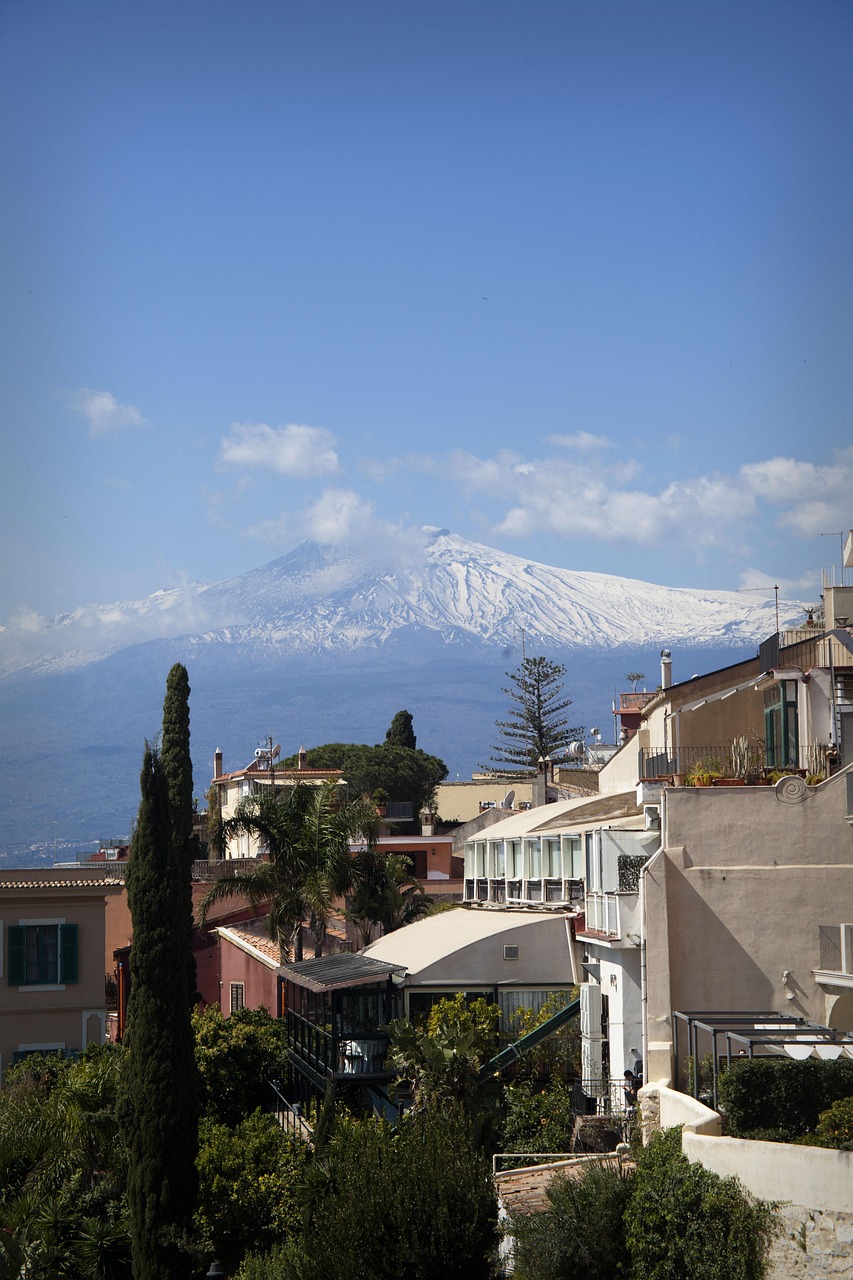 You can taste many world-class wines on the slopes of Mount Etna.
Wine Tasting
Wine tourism in Sicily has matured considerably over the past few decades, and several estates welcome visitors for tastings and tours.
The Etna region, with its volcanic soils and high-altitude vineyards, produces wines of mineral precision and unexpected elegance; visit Tenuta delle Terre Nere or Passopisciaro to sample Nerello Mascalese and Nerello Cappuccio.
In the west, near Marsala, the Donnafugata winery is housed in a restored baglio, a fortified farmhouse. It offers tastings paired with local cheeses and preserved vegetables.
The Vittoria region, in the southeast, specializes in Cerasuolo di Vittoria, Sicily's only DOCG wine, a blend of Nero d'Avola and Frappato that balances power and finesse.
These visits provide not merely gustatory pleasure but insight into the agricultural cycles and family traditions that have shaped Sicilian culture for generations.
Practical Considerations
The weather has a big impact on what your honeymoon in Sicily will be like. Sicily's climate varies by season: summer brings temperatures exceeding 35 degrees Celsius and crowds that strain the island's infrastructure; winter sees many coastal establishments close, though the interior remains accessible, and the light takes on a crystalline quality.
Spring—April through early June—and autumn—September through October—offer the ideal compromise, with moderate temperatures, fewer tourists, and landscapes either blooming or harvest-ripe.
Budget accordingly: Sicily can accommodate both modest and lavish expenditures, but quality experiences—meals at Michelin-starred restaurants, stays at historic hotels, private boat tours—demand financial commitment.
Safety concerns, often exaggerated in popular imagination, require measured assessment. Sicily is not the lawless frontier of cinematic stereotype; violent crime against tourists is rare, and the island's hospitality culture generally extends protection to visitors.
Exercise standard precautions: avoid ostentatious displays of wealth, secure valuables in hotel safes, and remain aware of your surroundings in crowded markets where pickpockets operate.
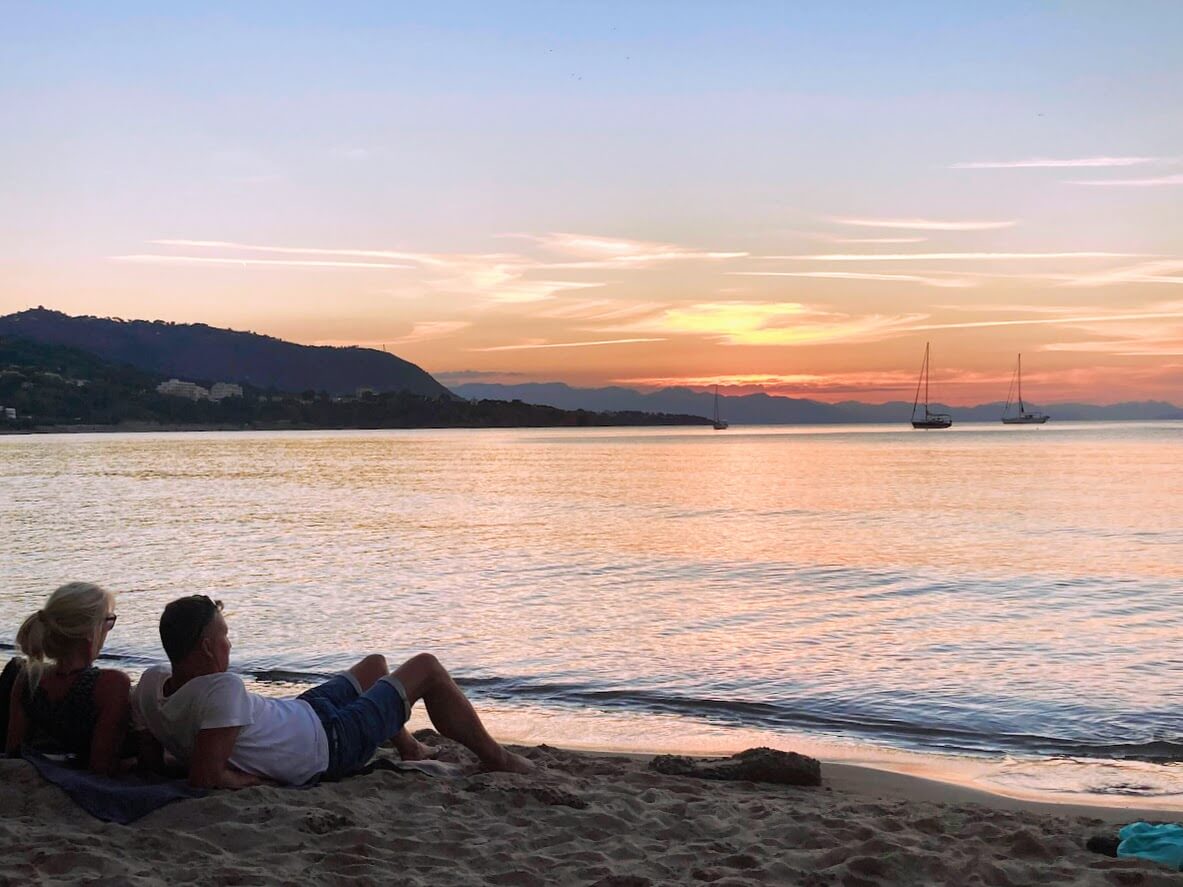
Honeymoon in Sicily: Conclusion
Your honeymoon in Sicily will reveal itself as a slow immersion into ancient landscapes, into meals that honor centuries-old traditions, into silences broken only by cicadas and distant church bells.
This is the island's gift: not escape from reality, but entry into a deeper, more textured version of it. You will return changed, carrying within you the taste of Nerello Mascalese, the memory of temple columns against a darkening sky.
Sicily begs you to meet it on its own terms, to surrender itineraries in favor of wandering, efficiency in favor of lingering.
If you can offer this—if you can allow the island's ancient rhythms to dictate the tempo of your first days as husband and wife—then your honeymoon in Sicily will become not merely a trip. It will be a foundation laid in stone as enduring as the temples themselves.
(December 17, 2025)
You might like these:
Trapani and Western Sicily Itinerary
Western Sicily around Trapani - Beaches, food, ancient sites and more.
Festivals in Sicily: Dates, Rites & Travel Planning
Festivals in Sicily help you time your visit for processions, performances, and street food—season by season.
Monreale Cathedral: From Norman Conquest to Iconic Landmark
Monreale Cathedral - Discover why it remains one of Sicily's most cherished treasures
Cefalu Beaches: Where Sun, Sand, and Calm Await
Discover Cefalu beaches where warm sands, clear waters, and coastal charm come together.
Best Beaches in Sicily - Golden Sands and Turquoise Waters
Take a look at the best beaches in Sicily: A paradise in the heart of the Mediterranean
Want more Sicily like this?
I post short cultural threads and decision-filters for slow travelers—so you can choose experiences without spiraling.
Follow:
Contact: vesa@manyfacesofsicily.com
Recent Articles


-
Markets in Palermo: Which Fits Your Day Best?
Jul 22, 26 03:54 PM
 Choose the right markets in Palermo, from Ballarò’s full sensory rush to Il Capo’s easier flow, plus what to eat and when to go.
 -
Things to do in Catania for a Slower Stay
Apr 12, 26 02:00 PM
 Use this honest guide to things to do in Catania if you want Sicily to feel lived-in, beautiful, and easier to navigate without overplanning.
 -
Things to Do in Palermo (Go Slow, Choose Well)
Mar 24, 26 01:14 PM
 Things to do in Palermo, curated for slow days: choose markets vs. museums, sea walks vs. catacombs, plus Monreale, Mondello, and Cefalù by train.