Leonardo Sciascia
- Home
- Main Cities in Sicily
- Taormina
Taormina - Terraced Jewel of the Mediterranean
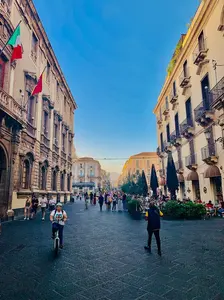
The dawn has come to Taormina. Corso Umberto is almost empty, the honey-colored facades just beginning to glow under the rising sun as shopkeepers sweep last night's dust from the cobbles.
What a magical moment, but is it worth the effort: The higher prices, the crowds that soon come sweeping in? If so, how long should you stay here, given your limited time in Sicily?
The hilltop town of Taormina is a place of both volcanic drama and high-end tourism, where mythical landscapes, grand hotels, and pebble beaches sit alongside souvenir stalls and multilingual menus.
In this guide, we'll take a look at its views, beaches, food, and overall atmosphere. You'll also get some day trip tips, so that in the end you can decide if it deserves a place in your Sicilian sojourn.
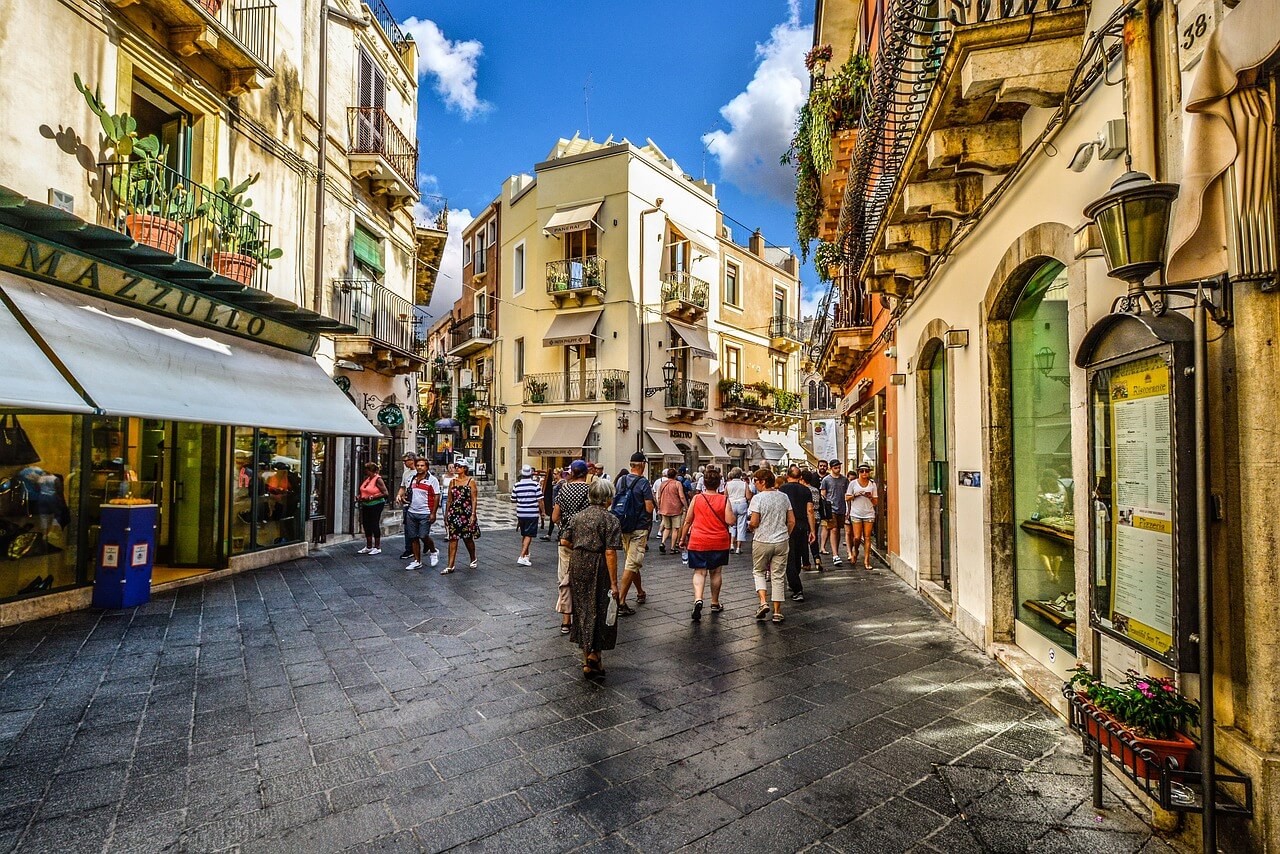 Corso Umberto, Taormina's main street. (Pixabay/user32212)
Best time to visit?
Best time to visit?
April-June and September-October (shoulder seasons with mild weather, fewer crowds, and lower prices).
Ideal stay length?
Ideal stay length?
2-3 days is enough to explore the town, beaches, and nearby attractions.
Who it's best for?
Who it's best for?
Couples, luxury travelers, and culture enthusiasts (scenic hilltop town with historic sites, upscale dining, and beautiful beaches).
Cost level?
Cost level?
Mid-range to expensive. Prices are roughly double compared to other Sicilian towns; expect €150-200/night for hotels, €15-20 for meals.
Pros and cons?
Pros and cons?
+ Stunning views, rich history, beautiful beaches, excellent restaurants, good base for Mount Etna and other attractions.
- Touristy and crowded (especially in summer), expensive compared to the rest of Sicily, steep hills/stairs can be challenging, beach access requires cable car or long walk.
What to Expect?
Taormina rises from the sea like a natural amphitheater, its medieval streets cascading down volcanic slopes that bear the fingerprints of Etna's ancient fury.
From nearly every vantage point, the great volcano dominates the western horizon, its snow-crowned summit exhaling thin ribbons of smoke into the cerulean vault above.
To the east, the Ionian Sea spreads itself in hammered silver, broken only by the dark silhouette of Calabria's distant shore.
This geographical positioning—suspended between fire and water, between earth and sky—endows Taormina with a mythological resonance, as though the gods themselves had chosen this precipice as their earthly dwelling.
History of Taormina
Taormina's history blends multiple influences, each ancient conqueror and culture leaving its mark on the land and the customs of its people.
The Greeks established the first settlement, which they called Tauromenion, after refugees from nearby Naxos fled the wrath of Dionysius the Elder in 403 BCE.
The Romans came next, then the Byzantines, the Arabs, the Normans, the Swabians, the Aragonese, and, finally, the unified Italian state.
Each occupation left architectural fragments—a Greek column embedded in a medieval wall, an Arab-Norman window overlooking a baroque piazza, a Saracen tower repurposed as a bell chamber.
This layered chronology creates a visual richness that rewards slow, attentive exploration rather than hurried checklist tourism.
Which doesn't mean you couldn't just pop up and see the sights. For which we will return shortly.
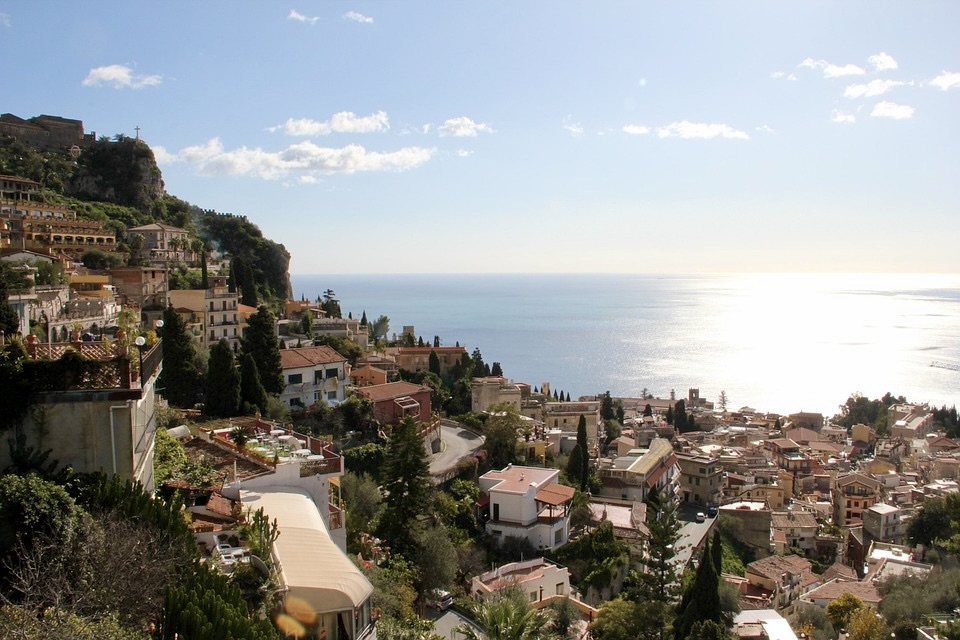 Taormina seen from above.
Why Choose Taormina?
Should you come to Taormina? In the end, the answer depends on you. (And the money at your disposal.)
Indeed, this isn't a destination for those seeking undiscovered Sicily, for solitude among crumbling villages where older women still wear black and speak only in dialect.
Taormina surrendered its innocence to tourism a long time ago, transforming itself into a polished jewel gleaming with boutique hotels, designer shops, and restaurants where menus are available in five languages.
The Corso Umberto I, the main pedestrian street that bisects the historic center from Porta Messina to Porta Catania, fills with visitors from April through October, their cameras raised like offerings to the Instagram deities.
Yet this commercial vitality, this embrace of the modern pilgrim, has also preserved the town's architectural heritage and funded the meticulous restoration of its monuments.
What Is There to Do?
The short answer to that question is: plenty. Here are some of the things to do in Taormina.
The Beaches
There are multiple beaches around Taormina. And for many, that is the main reason for going there.
taormina beach
Taormina has its own beach, although the town itself perches high above the waterline. It is connected to the shore by steep paths and a cable car. I recommend the latter.
The beach here consists of smooth pebbles rather than sand, with crystalline, cool water even in August, fed by currents that sweep up from the Ionian Sea.
Private beach clubs rent umbrellas and loungers for fifteen to twenty-five euros per day, providing changing facilities and overpriced refreshments.
The cable car—the funivia—descends from Via Pirandello every fifteen minutes, a three-minute journey that delivers you from medieval streets to the seaside in a single swoop.
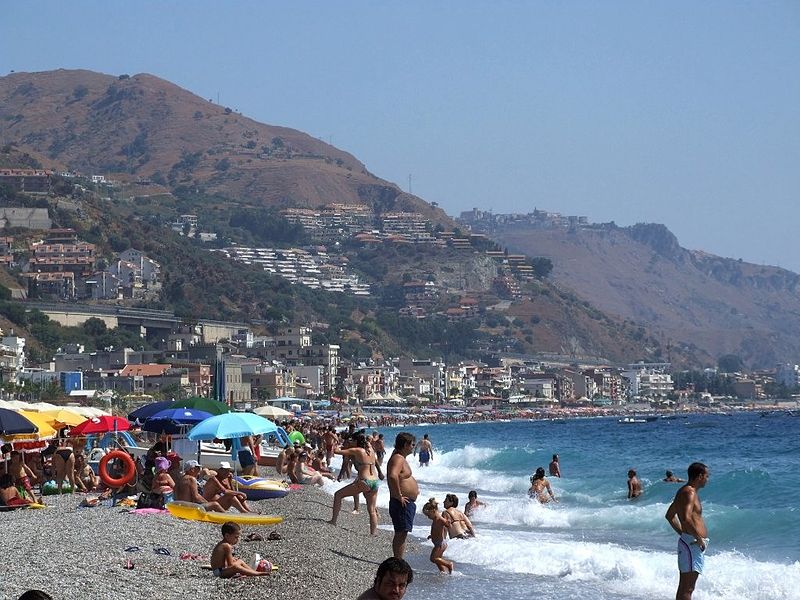 Taormina Beach.
other beaches nearby
Mazzarò, just north of Taormina Beach, provides a longer stretch of pebble beach.
Here, the water depth increases gradually, making it suitable for families with young children. However, the stones can be uncomfortable for those unaccustomed to such surfaces.
Giardini Naxos - another famous spot - is three kilometers south and offers genuine sand beaches and a more relaxed, less exclusive atmosphere.
Just keep in mind that there you'll sacrifice the dramatic backdrop of Taormina's medieval silhouette for a more conventional seaside experience.
Shopping
Shopping in Taormina presents a curious paradox—a medieval town transformed into an open-air mall where Prada and Hermès occupy ground floors once devoted to artisan workshops.
The Corso Umberto glitters with boutiques selling designer fashion, jewelry, leather goods, and ceramics, ranging from genuine Caltagirone craftsmanship to Chinese-made souvenirs stamped with "Made in Sicily" labels.
Prices reflect the captive tourist market and the high rents that prime locations command. Yet the convenience of purchasing here and the pleasure of browsing in a traffic-free zone with spectacular views justify the premium for many visitors.
For more authentic shopping, venture into the side streets where smaller shops specialize in Sicilian food products: extra-virgin olive oil from the slopes of Etna, sun-dried tomatoes packed in herb-infused oil, almond paste formed into miniature fruits, bottles of Nero d'Avola and Etna Rosso that capture the volcanic terroir in liquid form.
These make superior gifts and souvenirs, with their quality and provenance verifiable, and their prices more reasonable than those of fashion boutiques' offerings.
Greek-Roman Theater
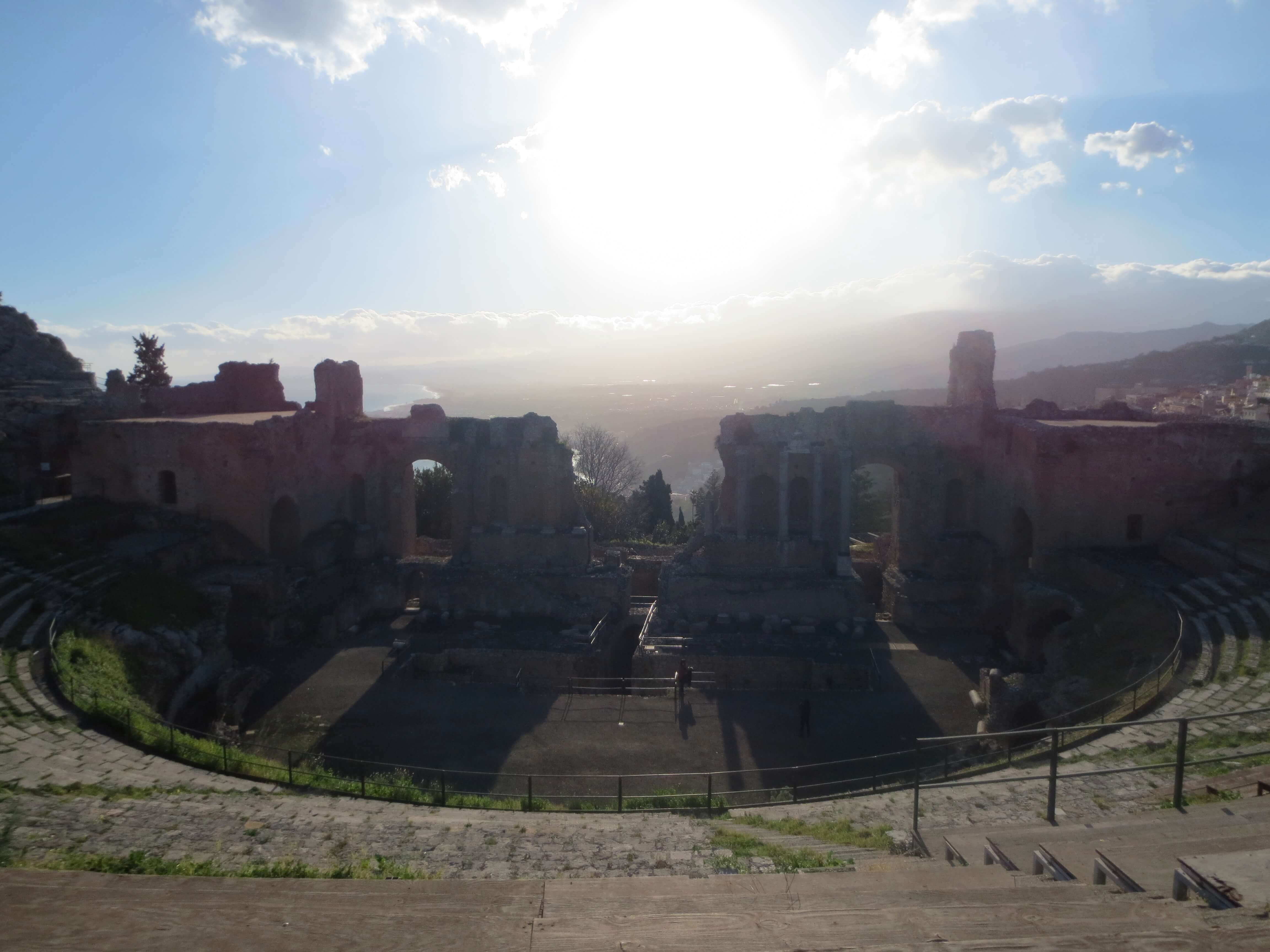
The Teatro Antico di Taormina, that magnificent ruin of Hellenistic ambition and Roman pragmatism, stands as the town's beating heart and its most celebrated monument.
Built in the third century before the Common Era and later expanded by Roman engineers, this open-air Theater measures 109 meters in diameter and once accommodated 10,000 spectators beneath its now-vanished roof.
Today, the cavea's limestone tiers frame a view so spectacular that you'll easily forget the stage itself, as eyes draw instead to Etna's smoking cone and the glittering sea beyond.
Public Gardens
The Villa Comunale, Taormina's public garden, occupies a promontory east of the Corso, its winding paths shaded by exotic palms, magnolias, and Mediterranean pines.
Lady Florence Trevelyan, an English aristocrat who settled here in the 1880s, designed these gardens as her personal Eden, constructing whimsical Victorian follies—brick pavilions topped with crenellations and turrets—that now serve as viewing platforms.
During the hot summer months, the garden's shade and sea breezes offer a welcome respite from the Corso's sun-baked stones.
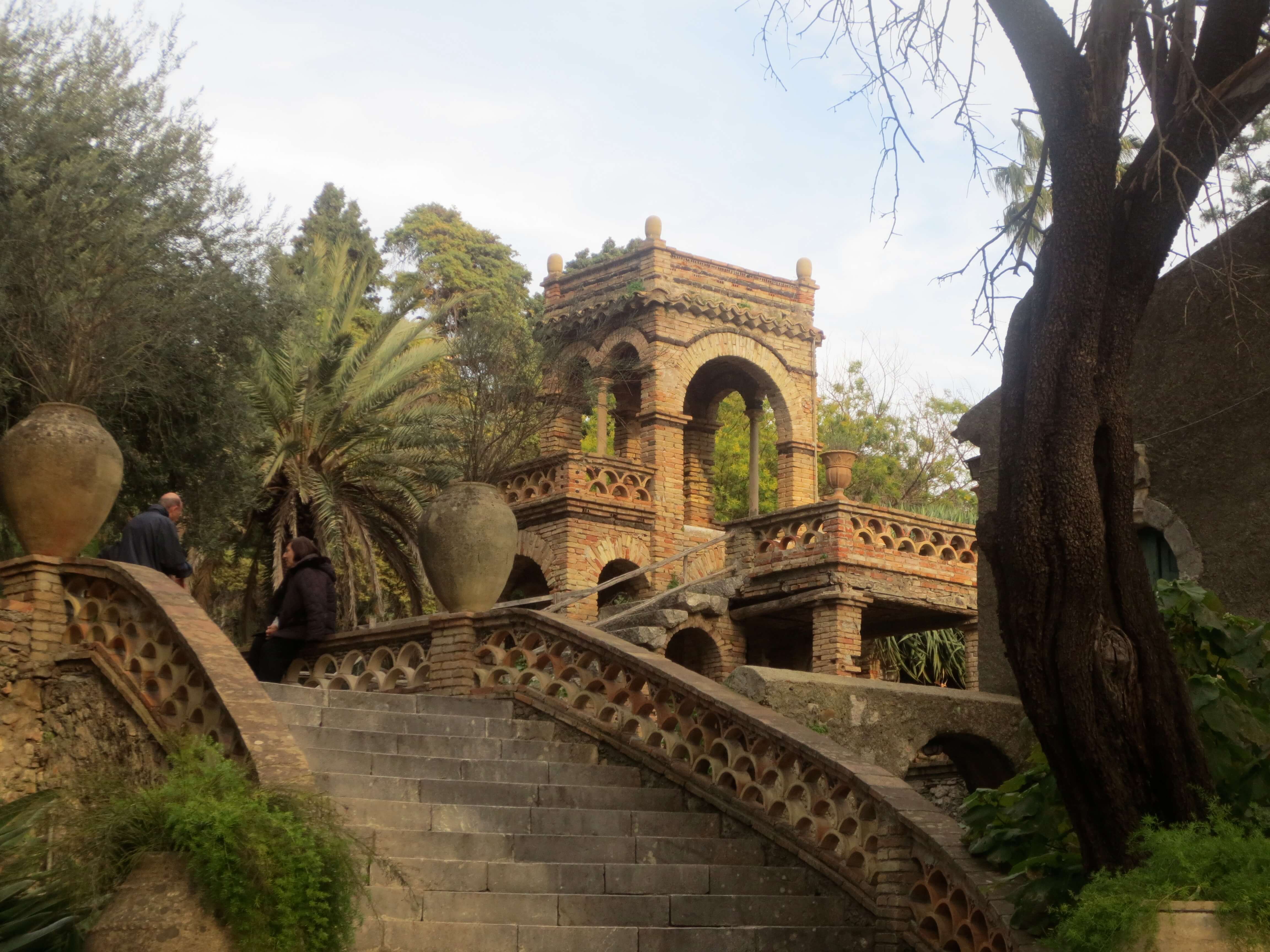 Taormina public gardens.
Sanctuary of Madonna della Rocca
It takes a little effort to climb the Santuario della Madonna della Rocca, a tiny chapel carved into the cliff face above the town. From there, you can continue upward to the ruins of the medieval castle that crowns Monte Tauro at 398 meters.
The path, steep and unshaded, demands sturdy footwear and adequate water. Still, the summit panorama encompasses the entire sweep of coastline from Messina to Syracuse, with Etna presiding over the interior like a benevolent tyrant.
Up there, the climb's difficulty seems like a small price to pay for such transcendent beauty.
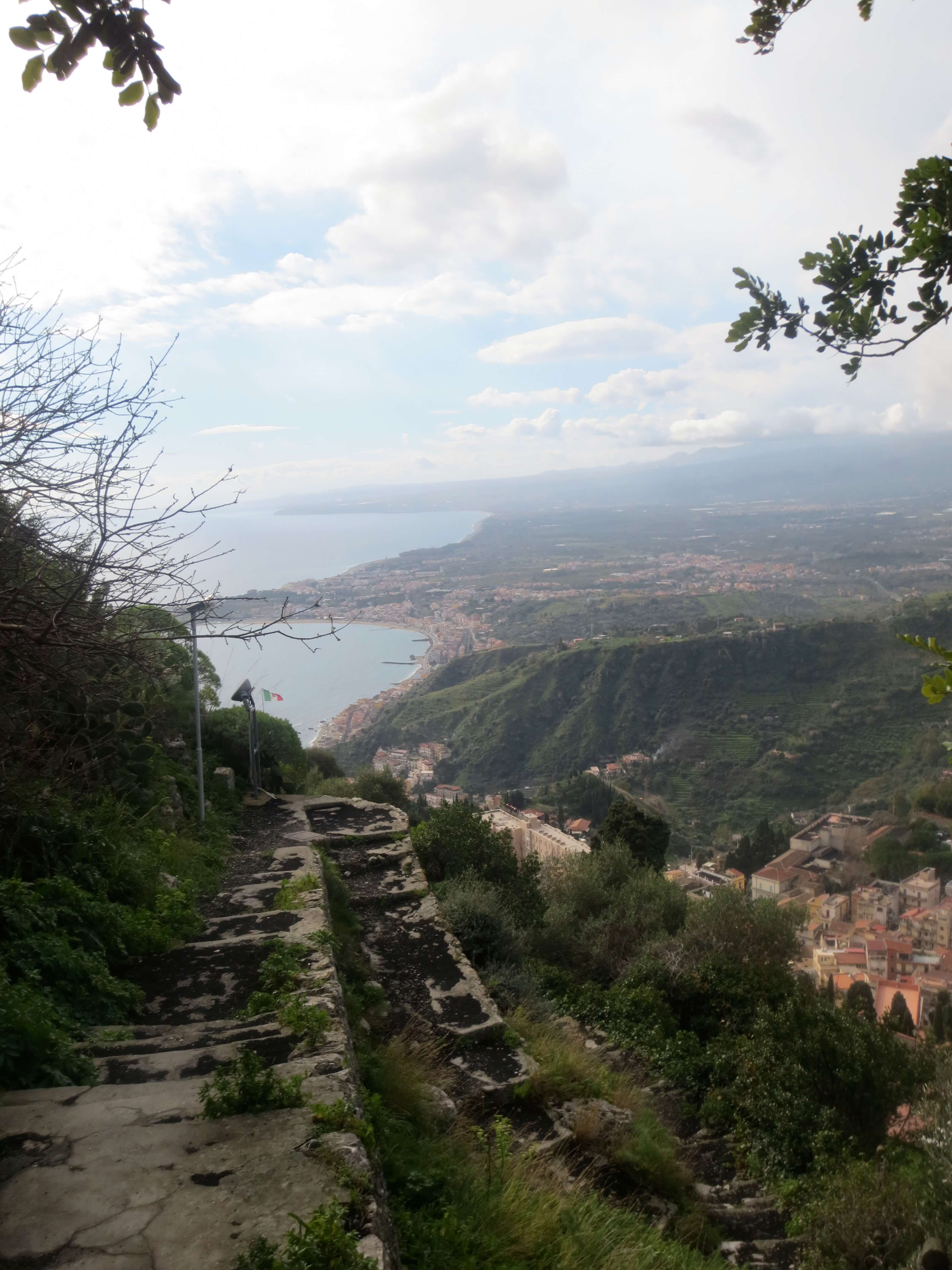 The path leading to Madonna della Rocca.
Attractions Outside Taormina
You can use Taormina as a base for the whole of eastern Sicily. But there are many attractions nearby as well.
Etna
Mount Etna, Europe's highest and most active volcano, rises just thirty-five kilometers to the west, its summit accessible via cable car and jeeps that navigate the lunar landscape of the upper slopes.
Tour operators in Taormina offer half-day and full-day excursions.
By renting a car, you can reach Rifugio Sapienza base station in under an hour. From there onward, you need to buy a guided tour. You can find operators around Taormina or buy one there.
Alcantara Gorges
The Alcantara Gorges, twenty kilometers northwest of Taormina, offer a dramatic contrast to Etna's desolation—a narrow canyon carved through ancient basalt by the Alcantara River, its walls displaying the hexagonal columnar jointing that occurs when lava cools rapidly.
In summer, you may wade into the frigid water, the current tugging at your legs while the canyon walls rise twenty meters overhead, their geometric precision suggesting the work of some obsessive stonemason rather than nature.
Where to Eat?
What will you eat in this town where Sicilian tradition collides with international expectations? The culinary landscape reflects Taormina's dual nature—authentic and performative, rooted and cosmopolitan.
In the Center
Restaurants along the Corso and around Piazza IX Aprile primarily cater to tourists, with menus featuring the highlights of Sicilian cuisine: pasta alla Norma with fried eggplant and ricotta salata, swordfish involtini, and cannoli filled with sweetened ricotta and studded with candied fruit.
Quality varies wildly; some establishments serve competent renditions of these classics, while others offer microwaved mediocrity at inflated prices.
Authentic Sicilian Food
For those craving a more authentic experience, it is better to avoid restaurants with multilingual touts stationed outside, whose practiced smiles and promises of "authentic Sicilian cooking" are inversely proportional to the food's actual quality inside.
Instead, seek out the osterie and trattorie on the periphery, where locals still outnumber visitors, and the menu changes with the season and the catch.
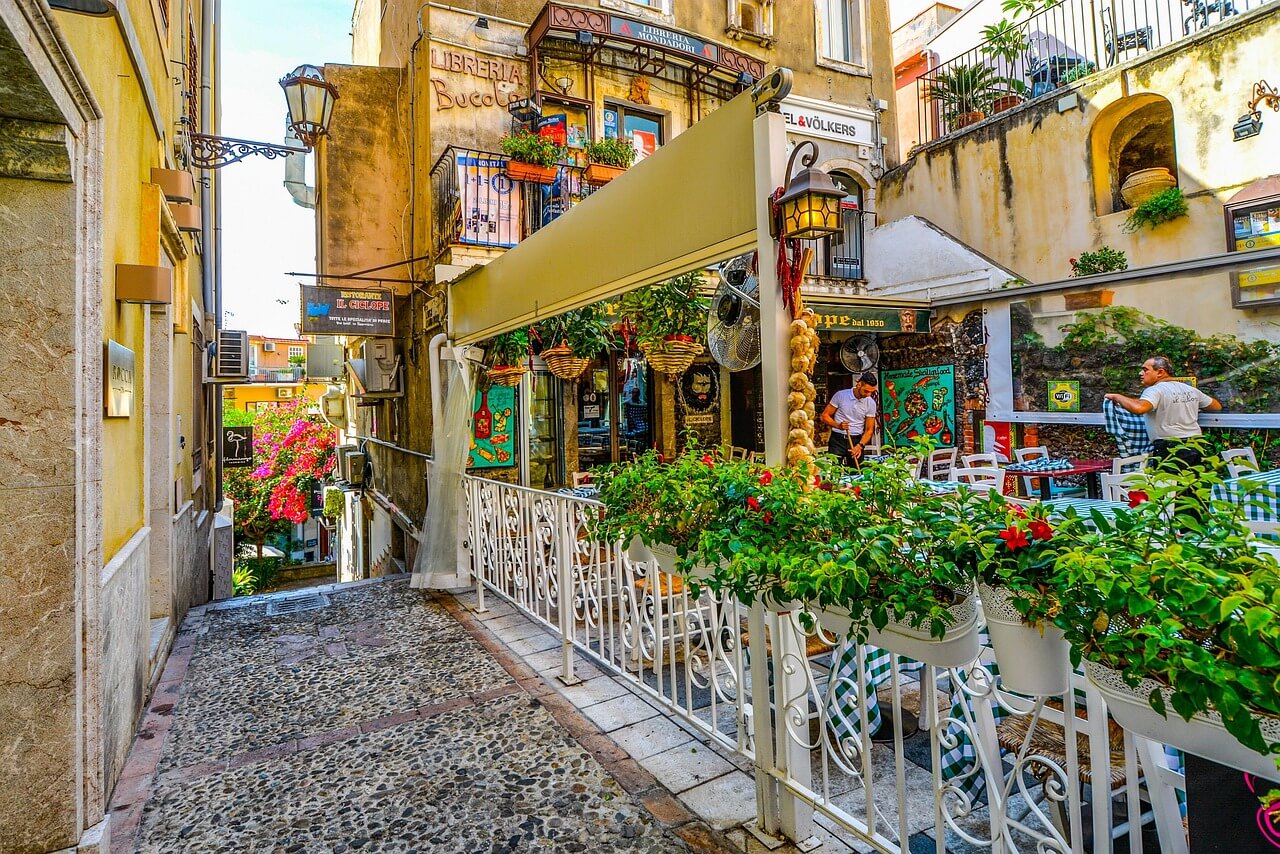 A restaurant in Taormina, a little off the main street. (Pixabay/user32212)
Fine Dining
Taormina is more than just another tourist trap. It is also a place where money can get you some absolute luxury.
La Capinera, perched on a cliff edge north of the center, earned its Michelin star through chef Pietro D'Agostino's reverent treatment of local ingredients—red prawns from Mazara del Vallo, pistachios from Bronte, capers from Salina.
The tasting menu, priced at 120 euros, unfolds like a meditation on Sicilian terroir, each course a precisely calibrated balance of tradition and innovation.
For more rustic fare, Trattoria da Nino on Via Pirandello has served honest Sicilian food since 1967, its grill perfuming the street with the smoke of swordfish and lamb chops.
Pasticcerias
No matter your dietary preferences, do not neglect Taormina's pasticcerie, those temples of Sicilian pastry arts where sugar and almond flour are transformed into edible architecture.
Bam Bar on Via di Giovanni serves what many consider Sicily's finest granita, the semi-frozen dessert that locals consume for breakfast, paired with a warm brioche.
The almond granita, textured like flavored snow and tasting of marzipan and orange blossom, provides a revelation for those accustomed to the icy slush that passes for granita elsewhere.
Where to Stay?
Where will you rest your head in this vertical town? Accommodation ranges from palatial grand hotels to modest pensioni tucked into medieval townhouses.
For Those Seeking Luxury
The legendary San Domenico Palace, a converted fifteenth-century Dominican monastery, sprawls across terraced gardens above the town center, its cloistered courtyards and frescoed chambers now serving guests who arrive in chauffeured limousines.
Here, for five hundred euros or more per night, you may sleep in cells once occupied by monks sworn to poverty, though the irony seems lost on most visitors.
The Belmond Grand Hotel Timeo, established in 1873, hosted Wagner, Wilde, and a constellation of Belle Époque luminaries; its neoclassical facade and manicured grounds epitomize a specific vision of Mediterranean luxury.
These establishments offer impeccable service, Michelin-starred dining, and views that justify their extravagant tariffs.
Less Expensive Options
Yet Taormina also shelters more modest lodgings where character compensates for the absence of marble bathrooms and concierge services.
Family-run hotels along Via Bagnoli Croce or Via Pirandello offer clean, comfortable rooms for 100 to 150 euros, often with breakfast served on terraces overlooking the sea.
Book early for shoulder-season visits; procrastinate, and you will find yourself in Giardini Naxos or Letojanni, pleasant enough coastal towns but lacking Taormina's elevation and mystique.
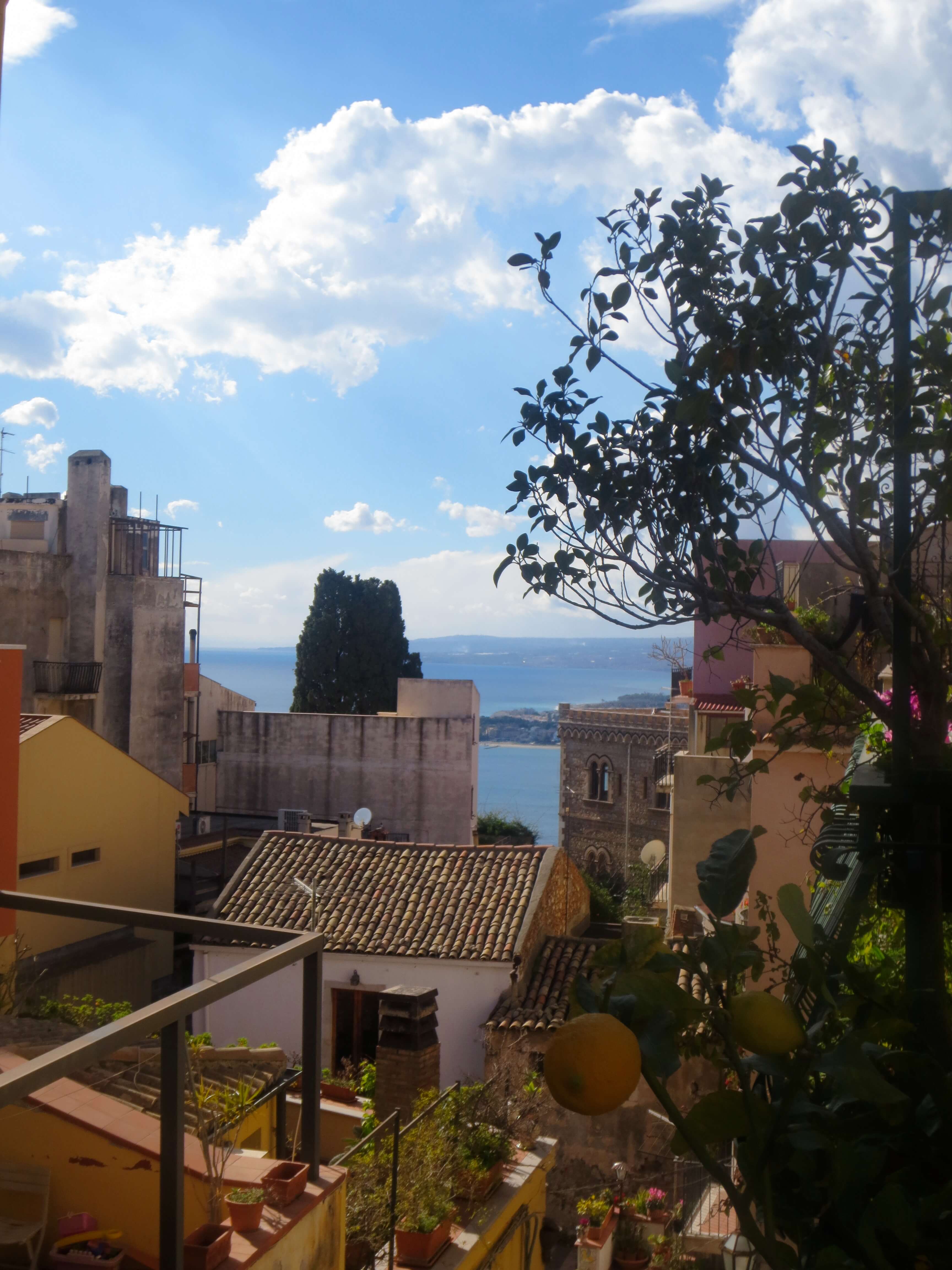 This was a terrace of our apartment, on one of the side streets.
Best Time to Go
When should you visit Taormina? Sicily, in general, is not a destination of eternal summer, but rather one with four seasons that vary greatly - and sometimes unexpectedly - throughout the year.
Still, Taormina is a case of its own, where the calendar profoundly shapes your experience. Especially in winter, it feels like a different place.
Summer
Summer, especially July and August, brings large crowds and temperatures that climb easily into the mid-thirties Celsius. The heat radiating from stone surfaces makes the town resemble a vast oven.
Hotel prices reach their zenith, restaurants require reservations days in advance, and the Taormina beach areas—Isola Bella, Mazzarò, and Giardini Naxos—become tapestries of umbrellas and sun-bronzed flesh.
Yet, summer also delivers the Taormina Film Fest, the Teatro Antico's performance season, and that particular Mediterranean light that turns the sea into liquid lapis lazuli.
If you can tolerate the throngs, the expense, and the heat, summer is when Taormina is at its most vibrant and spectacular.
Spring and Autumn
In late April through early June, or September through October, the tourist tide recedes, and the town recovers something of its dignity.
Spring carpets the surrounding hillsides with wildflowers that nod in the sea breeze.
Autumn, then again, brings the grape harvest to the nearby vineyards and a softening of the light, the harsh summer glare yielding to a golden luminosity that painters have long cherished.
Temperatures hover in the comfortable range of twenty to twenty-five degrees Celsius, ideal for the steep climbs and extended walks that Taormina demands.
Winter
Winter, though mild by northern European standards, sees most establishments shuttered and the town assuming a melancholic, almost ghostly aspect.
You can still see the sights, and some shops and restaurants are open to serve you. However, most places close at the end of the season.
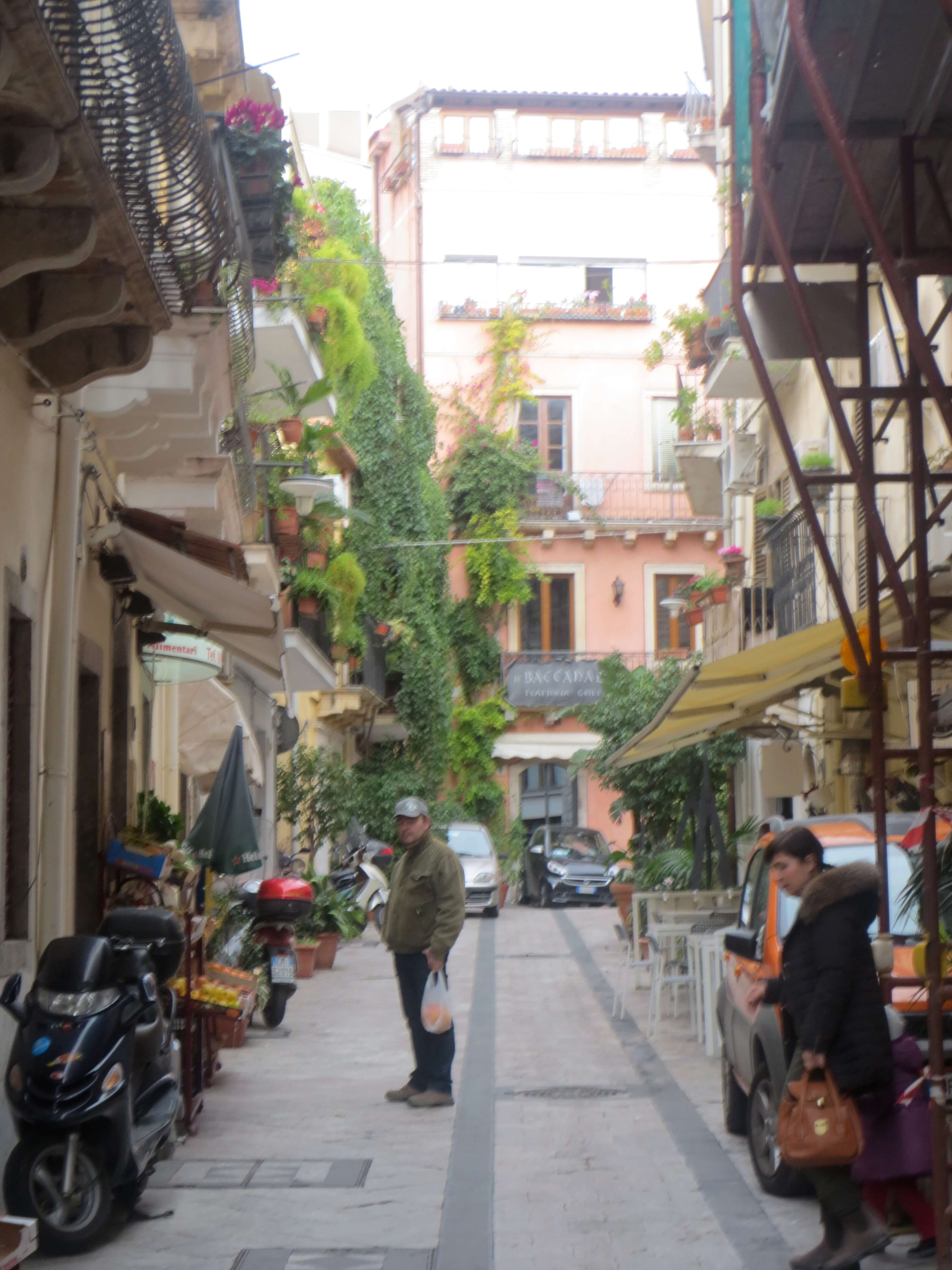 Some locals in the streets of Taormina in winter.
How Long Should You Stay?
If you are in a hurry, you can explore Taormina in two days. Still, its position makes it an ideal base for regional excursions.
In addition to the places mentioned before, you will find the mountain-top village of Castelmola, other picturesque towns, and many of The Godfather's filming locations nearby.
From Taormina, it is also possible to visit Syracuse and the legendary Baroque towns of the Noto Valley: Ragusa, Noto, and Modica.
Much depends on whether you want to see the sights and continue your journey, or immerse yourself in the city's atmosphere for a more extended period.
For a budget traveler, it is better to favor the shoulder seasons, see the sights, and move on. Or, you can stay at some other destination nearby and visit Taormina as a day trip destination.
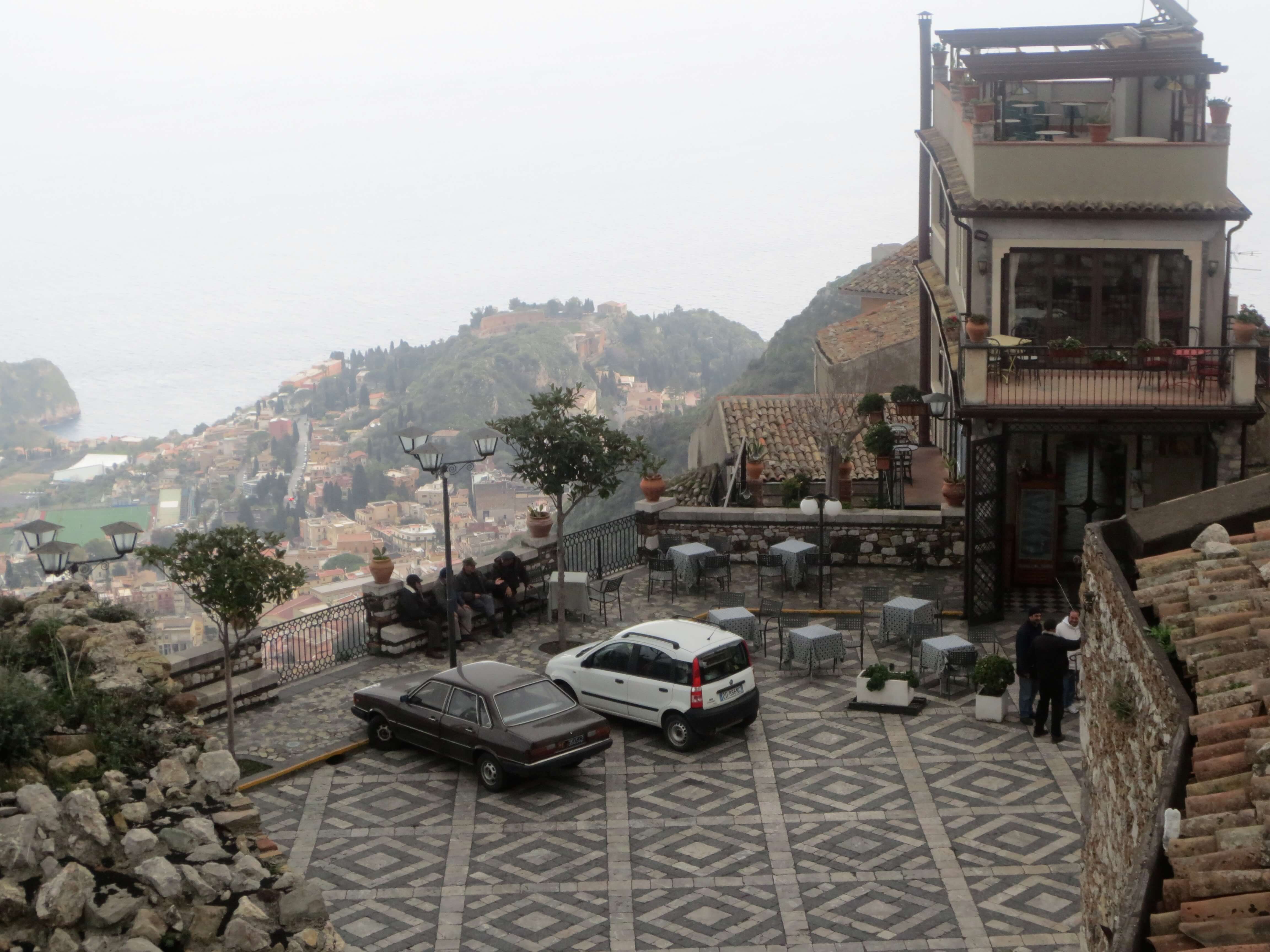 The main square of Castelmola, a small hilltop village near Taormina. You can see Taormina down below.
Conclusion
So we return to the original question: Is Taormina worth it? The short answer is: it depends.
The key to Taormina lies in calibration—of expectations, of budget, of timing.
Taormina has made its peace with tourism, transforming what might have been a curse into a kind of salvation.
In the end, Taormina offers not authenticity in the purest sense, but rather a curated experience of Sicilian beauty—polished, yes, but not false.
It is a terraced jewel that knows its own worth and charges accordingly, yet delivers on its promises with a consistency rare in Mediterranean tourism.
Whether it deserves a place in your Sicilian sojourn depends on what you value: if beauty, comfort, and convenience outweigh the desire for undiscovered corners and bargain prices, then Taormina will reward your visit.
If not, the island holds countless other treasures waiting in the volcanic hills and forgotten coastal towns.
But you will always wonder, just a little, about that view from the Greek Theater at sunset, and whether you should have made the climb after all.
(February 7, 2026)
You might like these:
Main cities in Sicily: Quick Filters for Longer Stays
Skip the noisy rankings. Main cities in Sicily, explained with honest pros/cons—so you can pick Palermo, Catania, Syracuse or beyond without second‑guessing.
Things to Do in Palermo (Go Slow, Choose Well)
Things to do in Palermo, curated for slow days: choose markets vs. museums, sea walks vs. catacombs, plus Monreale, Mondello, and Cefalù by train.
Things to Do in Cefalu - The Ultimate Guide
Things to Do in Cefalu: An ancient fishing port with lively beach life - Learn all there is to know!
Things to Do in Syracuse, Sicily: A Cultural Journey Through Time
Things to Do in Syracuse: Discover what makes it such a great place to visit.
Things to do in Catania for a Slower Stay
Use this honest guide to things to do in Catania if you want Sicily to feel lived-in, beautiful, and easier to navigate without overplanning.


Want more Sicily like this?
I post short cultural threads and decision-filters for slow travelers—so you can choose experiences without spiraling.
Follow:
Contact: vesa@manyfacesofsicily.com
Recent Articles


-
Markets in Palermo: Which Fits Your Day Best?
Jul 22, 26 03:54 PM
 Choose the right markets in Palermo, from Ballarò’s full sensory rush to Il Capo’s easier flow, plus what to eat and when to go.
 -
Things to do in Catania for a Slower Stay
Apr 12, 26 02:00 PM
 Use this honest guide to things to do in Catania if you want Sicily to feel lived-in, beautiful, and easier to navigate without overplanning.
 -
Things to Do in Palermo (Go Slow, Choose Well)
Mar 24, 26 01:14 PM
 Things to do in Palermo, curated for slow days: choose markets vs. museums, sea walks vs. catacombs, plus Monreale, Mondello, and Cefalù by train.
