Leonardo Sciascia
- Home
- Main Cities in Sicily
- Cefalu
- Cefalu Beaches
Cefalu Beaches: A Litany of Sand and Sunshine
We stand before the question that has drawn you here—what beaches await in Cefalu, that ancient Norman jewel pressed between mountain and sea?
The Sicilian coast unfurls its offerings with neither haste nor apology, and we shall guide you through each strand and cove, each promise of salt and sun.
The beaches in Cefalu and its surrounding territories number more than a dozen, yet each possesses its own character, its own particular benediction for the traveler who seeks respite from the world's clamor.
The Main Beach
The town beach—Spiaggia di Cefalu proper—stretches golden and immediate beneath the shadow of La Rocca, that limestone sentinel rising 270 meters above the medieval quarter.
Here, the sand lies delicate and pale, a crescent nearly two kilometers long, bordered by the lungomare, where palms sway in their perpetual vigil.
The water deepens gradually, its turquoise clarity inviting even the most tentative swimmer; families gather here, their umbrellas planted like territorial markers.
This is the most accessible of Cefalu beaches, the one that requires no pilgrimage, no vehicle, no particular fortitude—merely the willingness to descend from your lodging and surrender to the Tyrrhenian embrace.
Yet proximity breeds crowds. In July and August, the main beach transforms into a tapestry of bodies. This sun-worshipping congregation leaves little sand unclaimed.
We observe the paradox: the very convenience that draws you here may also diminish the solitude you crave.
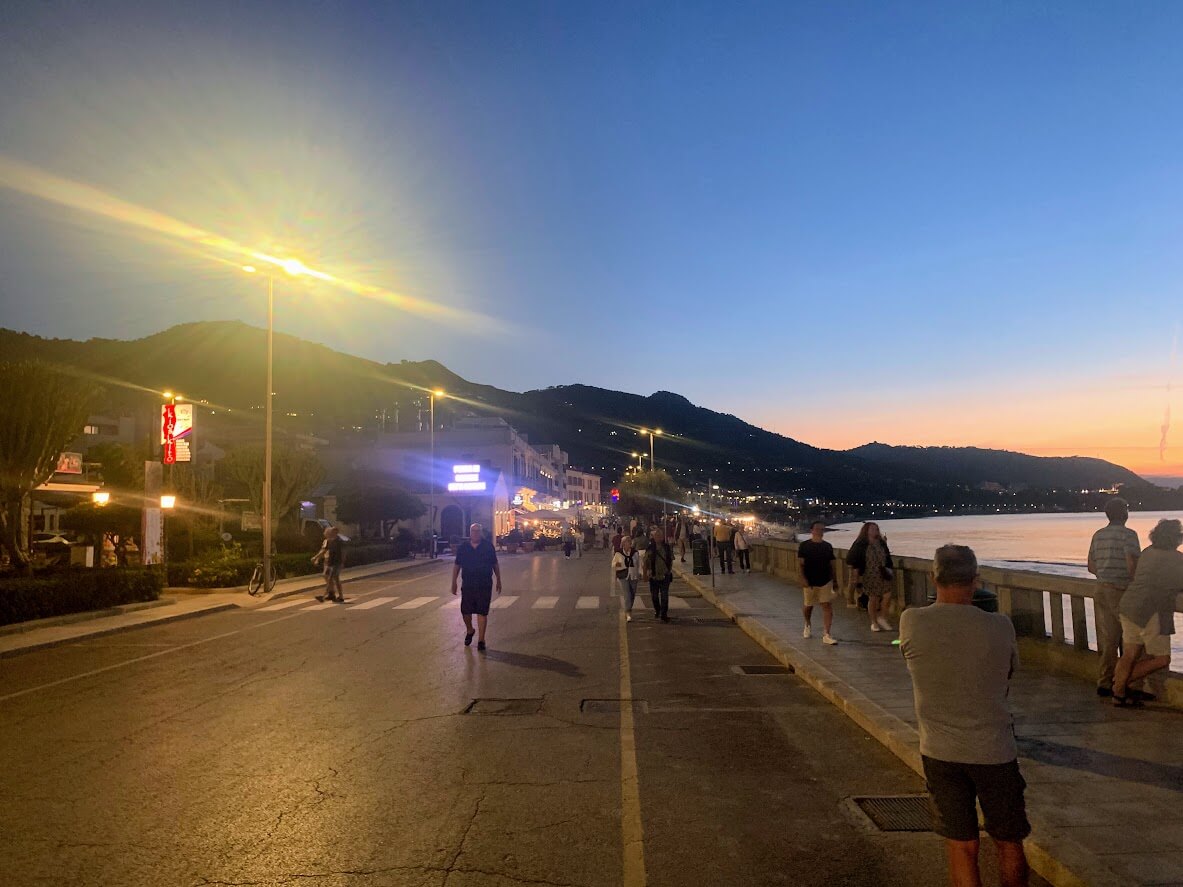 Lungomare.
Mazzaforno
Westward along the coastal road, beyond the town's immediate grasp, lies Mazzaforno—a beach that announces itself through a small parking area and a descent down weathered steps.
The sand here darkens slightly, mingling with volcanic minerals that speak of Sicily's fiery genesis; the beach extends roughly 800 meters, flanked by rock formations that create natural boundaries and a sense of enclosure.
Fewer tourists venture this far, and there is a reason: the water might not always be that crystalline - so it might at times lack that luminous transparency that defines the best Cefalu beaches.
There might be a certain austere beauty because of the absence of crowds. But to balance this out, the occasional rough seas and larger waves can make the place unsuitable at times—especially for small children.
But if solitude is what you are looking for and you are not too particular about comfort, the place might be just what you are looking for.
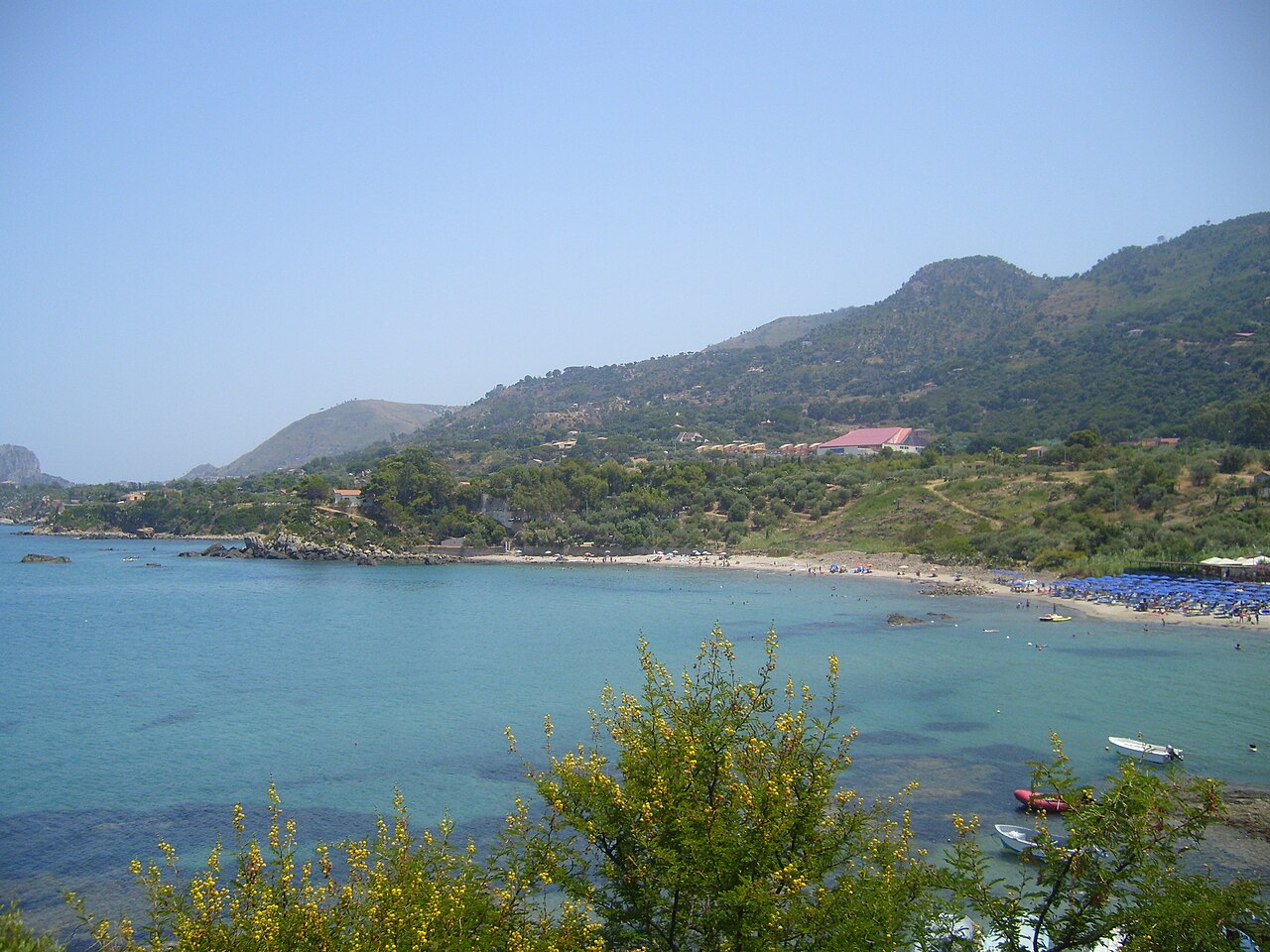 Mazzaforno Beach seen from a distance. (Archipenzolo/Wikimedia Commons)
Caldura
We turn now to Caldura, nestled in a small bay approximately two and a half kilometers (1,5 miles) east of the town center.
This intimate cove, perhaps 200 meters in length, presents a mixture of sand and smooth pebbles, its waters sheltered by rocky promontories that tame the waves into gentle undulations.
The seabed reveals itself in graduated shades of azure and emerald, each depth marked by a shift in hue, and snorkeling here rewards the curious with glimpses of marine life that inhabits the rocky margins.
Sant'Ambrogio
Shall we speak of Sant'Ambrogio? This beach lies farther along the eastern coast, roughly 6 kilometers (3,7 miles) from Cefalu's historic core, accessible by car or the regional buses that lumber along the coastal highway.
The water remains clean, the swimming safe, and for those who measure pleasure in square footage of unclaimed sand, Sant'Ambrogio delivers its own quiet satisfaction.
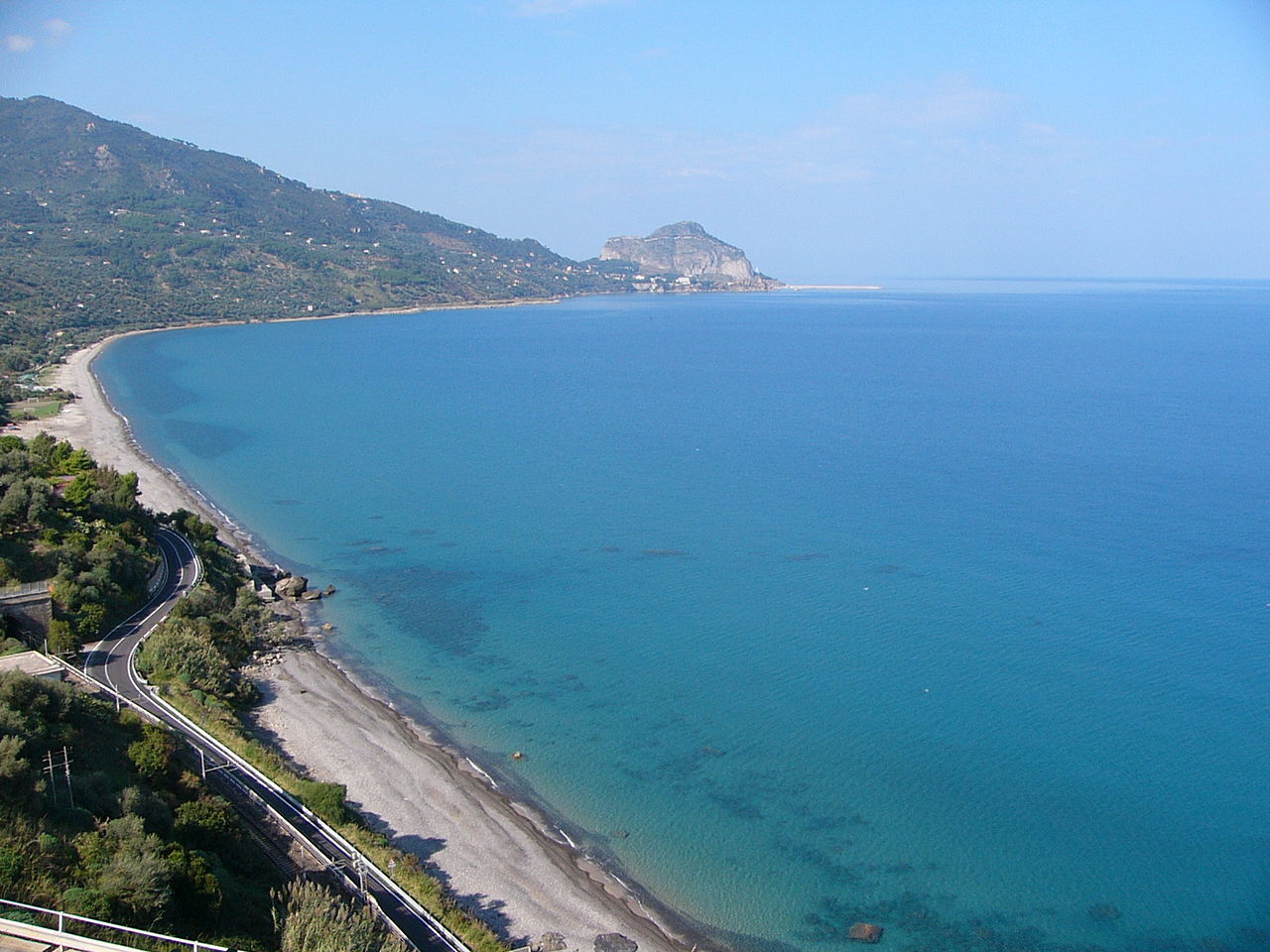 Sant'Ambrogio Beach. You can see La Rocca of Cefalu in the distance. (That big hill.)
Settefrati
Westward from the town center, the coastline grows more rugged, more resistant to easy access. Settefrati—the name means "seven brothers," though its etymology remains obscure—demands a brief hike down from the road, a descent that filters out the casual visitor.
The beach is made of fine pebbles and sand. Here, the water achieves a depth and clarity that borders on the supernatural, the seabed visible at ten meters as though through polished glass; the absence of facilities becomes a feature rather than a deficit, a guarantee of tranquility.
Pollina
We must acknowledge Pollina, though it lies beyond Cefalu's immediate sphere—a 20-kilometer (12.4 miles) journey eastward brings you to this broader beach beneath the hilltop village of the same name.
The sand here spreads wide and gray, volcanic in composition, backed by the railway line that occasionally punctuates the silence with its iron passage.
Sicilian beaches of this character attract fewer international visitors yet offer generous space and a certain raw authenticity; the mountains rise dramatically behind, creating a theatrical backdrop that compensates for any lack of postcard-perfection.
Cefalu Vs. Other Beach Destinations in Sicily
How do these shores compare to Sicily's more celebrated coastal destinations? Taormina's beaches, perched below their clifftop town, possess undeniable drama—yet they are more crowded, and often accessible only by cable car or precipitous stairway.
San Vito Lo Capo, in Sicily's northwestern corner, boasts sand of almost Caribbean whiteness and water of corresponding brilliance. Yet, it lies away from any real town and caters to a different rhythm, a different scale of tourism.
The Scala dei Turchi, that white marl cliff near Agrigento, offers both visual spectacle and traditional beach comfort. In this geological marvel, swimming almost takes a back seat to the visual feast.
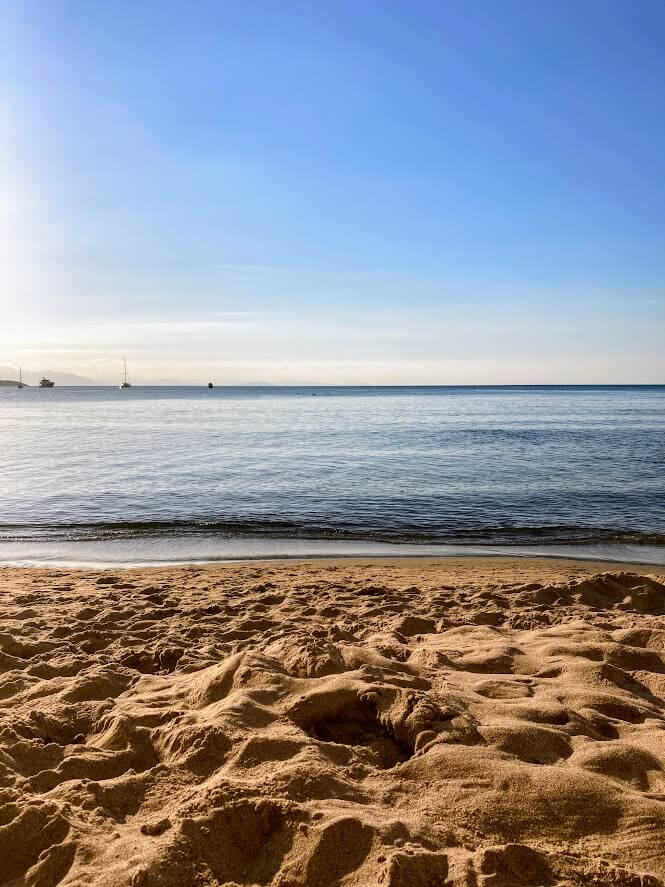
The beaches around Syracuse and the southeastern coast offer their own charms. Yet they belong to a different Sicily. Less mountainous, less Medieval. They are also far from Arab-Norman attractions, which are centered around the Palermo area, including Cefalu's cathedral.
Cefalu, with its beaches, offers proportion—the balance between accessibility and authenticity, between infrastructure and wilderness. You need not choose between medieval splendor and coastal pleasure; they coexist here within walking distance, within a single day's itinerary.
Consider the practical dimensions of your choice. If beach life is your primary goal, you don't need a vehicle in Cefalu. This way, the main town beach and Caldura become your primary options, both reachable on foot or by a brief taxi ride.
If you command a rental car, the whole spectrum opens before you—Mazzaforno, Sant'Ambrogio, Settefrati, even the more distant strands toward Pollina or westward toward Campofelice di Roccella.
Not to mention the many charming small hilltowns and hiking trails in the nearby Madonie Natural Park.
When is the Best Time to Go to Cefalu?
The season matters profoundly. From June through September, the water temperature rises to 24–27 degrees Celsius, warm enough for extended immersion.
Yet, August brings not only warmth but also the full weight of European vacation culture, with beaches filling to capacity and parking areas overflowing.
May and October offer temperate alternatives—the water is still swimmable at 20–22 degrees, the crowds are diminished, the light is softer and more forgiving.
The question of amenities deserves attention. The main Cefalu beach offers numerous stabilimenti—beach clubs with loungers, umbrellas, changing facilities, and attached restaurants.
Caldura provides a single such establishment, more modest in scale. Mazzaforno and Settefrati offer nothing beyond the elements themselves; bring water, bring food, bring shade if you require it.
Sant'Ambrogio occupies a middle ground, with some services available but not ubiquitous.
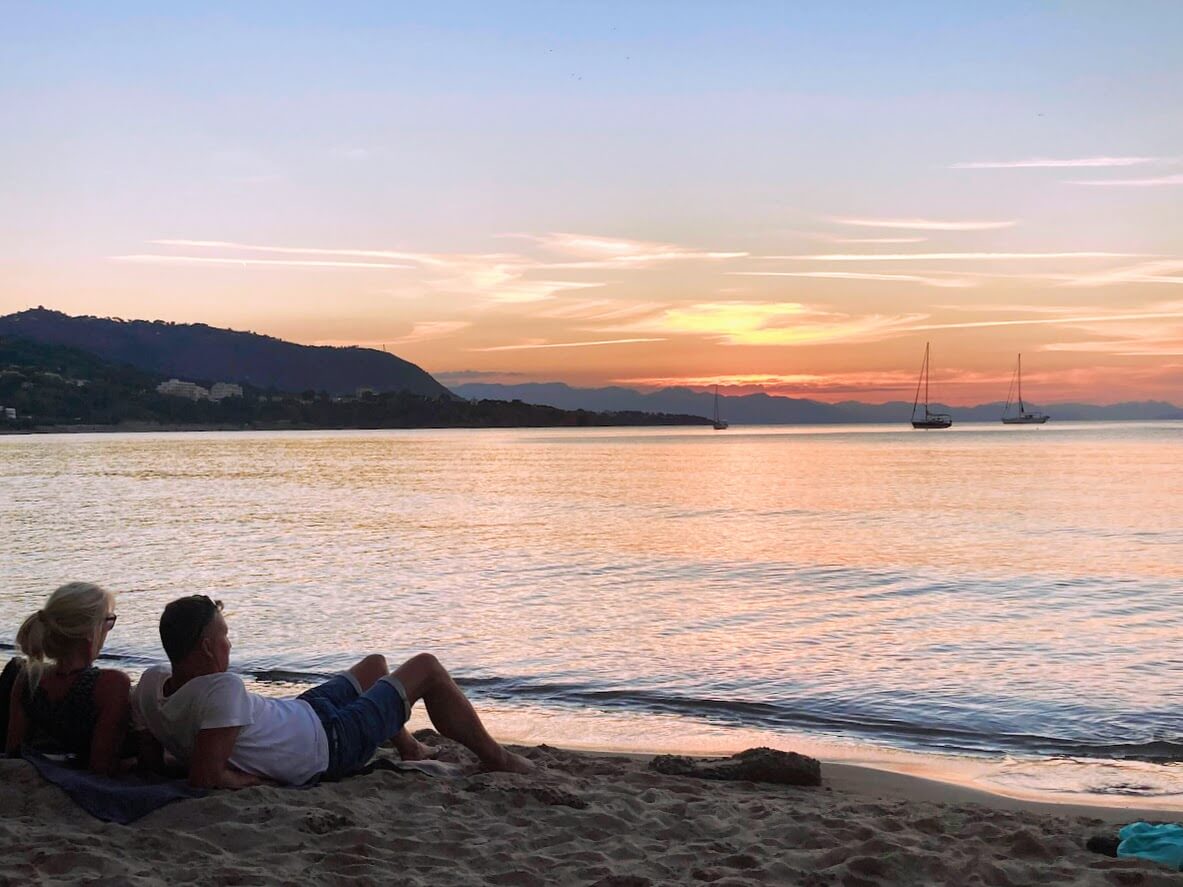
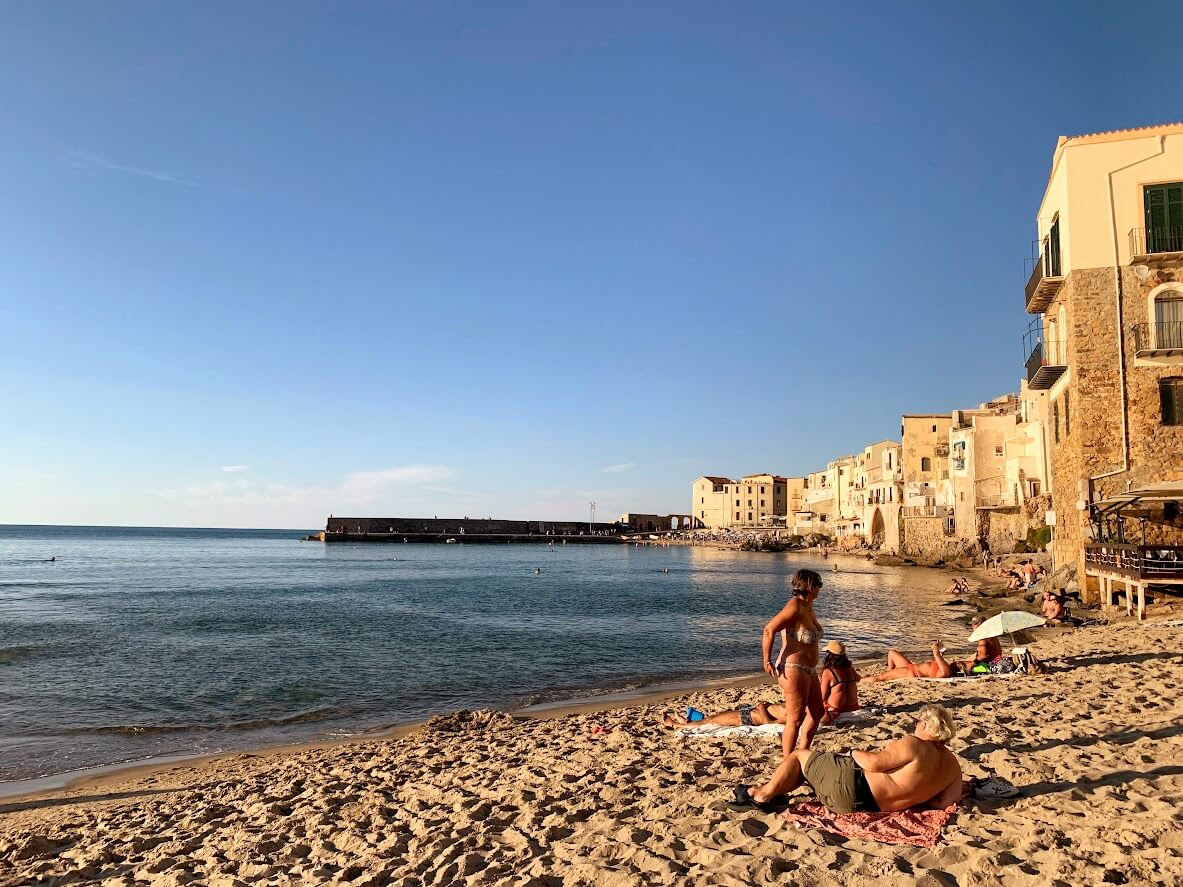 Cefalu's main beach is next to the town's historical center. It remains the best beach in town. Water stays warm into late autumn. This picture was taken in October. The water was still warm, and there were no crowds.
Best Cefalu Beaches According to Your Interests
For families with young children, the main beach's gradual slope and proximity to town create obvious advantages—shallow water extending many meters from shore, lifeguards present during high season, restaurants and gelaterias within immediate reach.
For couples seeking romance or solitude, the more remote coves reward the effort of access with privacy and unspoiled vistas.
The adventurous might consider a boat excursion to more remote locales. These journeys reveal hidden coves and sea caves inaccessible by land.
These trips, typically lasting three to four hours, include swimming stops at locations where the water achieves that mythical clarity, that sense of swimming through liquid light rather than mere seawater.
We must also speak truthfully about limitations. Cefalu beaches are Mediterranean beaches, subject to Mediterranean conditions—seaweed accumulates after storms and water remains refreshing rather than bathwater-warm.
The beauty here is real but not as exotic as, say, in the Caribbean.
Yet therein lies their particular grace. These are beaches embedded in a living town, not resort constructs designed solely for tourist consumption.
The same water that laps at your feet has witnessed millennia of Sicilian history—Greek traders, Roman galleys, Arab dhows, Norman longships.
The mountain that shadows the beach has sheltered temples and fortresses, has watched empires rise and crumble.
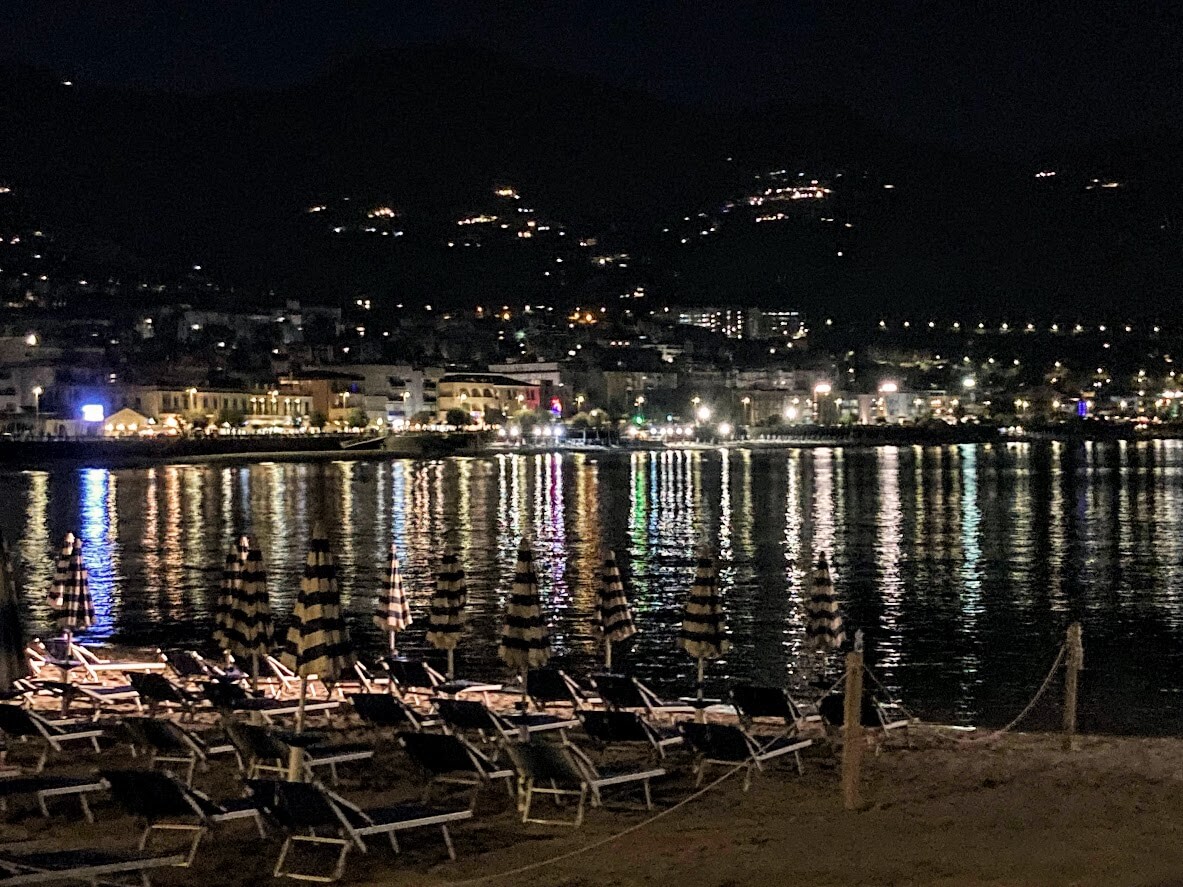 Cefalu Beach after sunset.
Conclusion
As you plan your Sicilian holiday, consider what you seek. If your desire runs toward blissful hours of sun and sea, punctuated by excellent meals and evening strolls through medieval streets. In that case, Cefalu and its beaches will serve you well.
Then again, if you require constant animation, water sports infrastructure, or nightlife that extends past midnight, you may find the town's offerings too modest, too provincial.
Each of the Cefalu beaches possesses its own character, its own particular gift for the traveler who approaches with open expectation.
Make your choice according to your nature—whether you gravitate toward the communal or the solitary, the convenient or the remote.
The Tyrrhenian Sea awaits with its ancient patience, and the beaches of Cefalu stand ready to receive you into their warm, sun-drenched embrace.
We have spoken; now you must go and discover which shore calls to you most insistently, which stretch of sand and water will become the setting for your own Sicilian reverie.
(October 30, 2025)
Want more Sicily like this?
I post short cultural threads and decision-filters for slow travelers—so you can choose experiences without spiraling.
Follow:
Contact: vesa@manyfacesofsicily.com
Recent Articles


-
Markets in Palermo: Which Fits Your Day Best?
Jul 22, 26 03:54 PM
 Choose the right markets in Palermo, from Ballarò’s full sensory rush to Il Capo’s easier flow, plus what to eat and when to go.
 -
Things to do in Catania for a Slower Stay
Apr 12, 26 02:00 PM
 Use this honest guide to things to do in Catania if you want Sicily to feel lived-in, beautiful, and easier to navigate without overplanning.
 -
Things to Do in Palermo (Go Slow, Choose Well)
Mar 24, 26 01:14 PM
 Things to do in Palermo, curated for slow days: choose markets vs. museums, sea walks vs. catacombs, plus Monreale, Mondello, and Cefalù by train.